.jpg?width=1600)
The Calling of Saint Matthew
Caravaggio · 1599–1600
A beam of light enters a room and changes one life.
A beam first identifies the person being called. Rembrandt gives light a more complex task: selecting faces, gestures, and action from a crowd.
Art journey · 5 encounters
Light passes through rooms, snow, street corners, and faces.
From Caravaggio’s theatrical contrast to Monet’s nearly silent light on snow.
.jpg?width=1600)
Caravaggio · 1599–1600
A beam of light enters a room and changes one life.
A beam first identifies the person being called. Rembrandt gives light a more complex task: selecting faces, gestures, and action from a crowd.

Rembrandt · 1642
This is not a queue for photos; it’s a group about to enter an action.
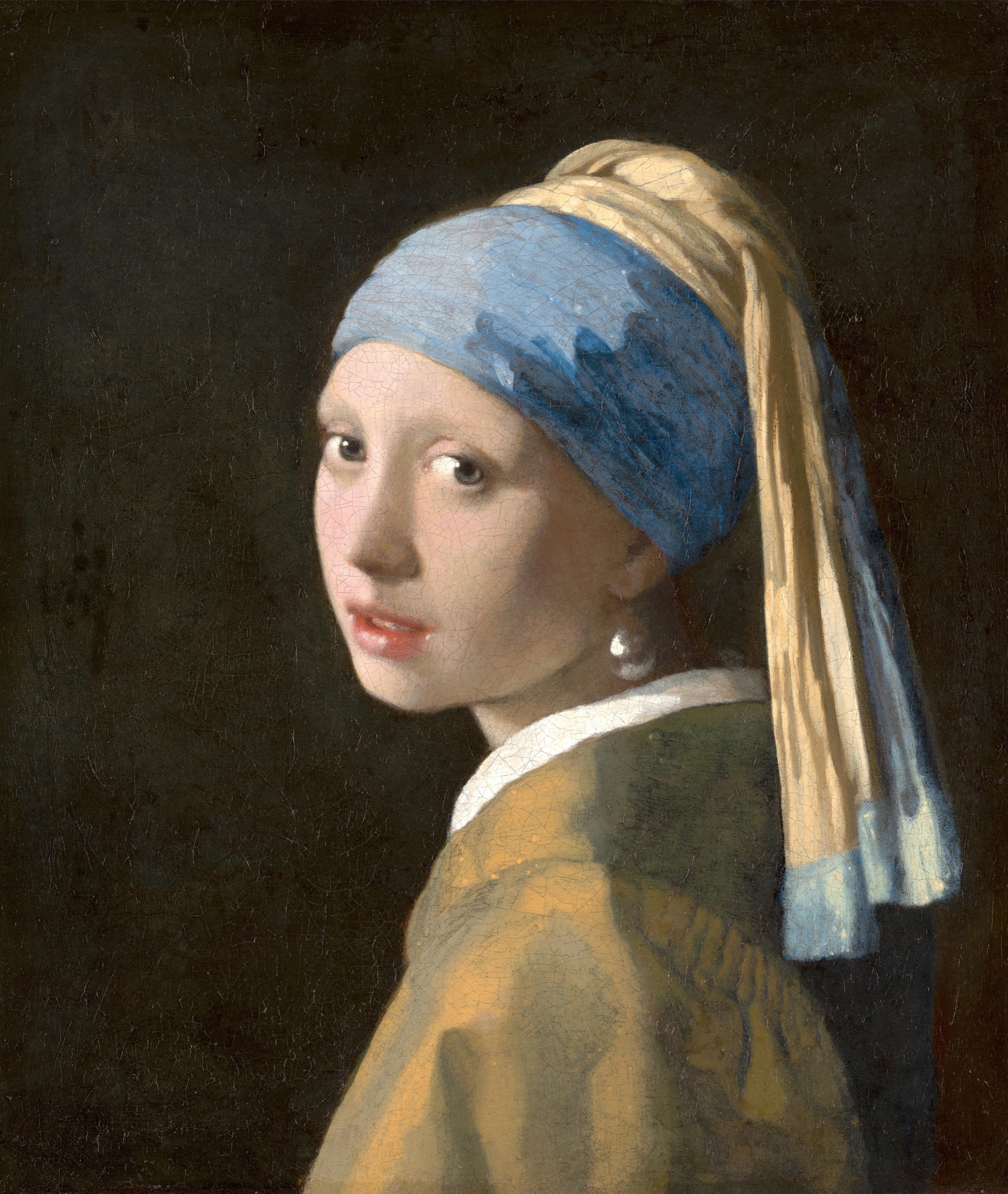
Light distributes attention across a group. The next work removes the setting and leaves a face, parted lips, and a pearl made almost entirely of reflection.

Johannes Vermeer · circa 1665
She turned, but her words were left unsaid.
Soft interior light rests on skin; winter light spreads across snow. Both create brightness with very little information.

Claude Monet · 1868–1869
Snow isn't white. At least, not to Monet.
Snow light approaches colorlessness; night lighting pushes yellow and blue apart. Finally, see how light not only illuminates but organizes human distance.
_1888.jpg)
Vincent van Gogh · 1888
A typical evening, illuminated by blue and yellow light.
This journey ends here
You saw light identify a person, break apart a company, approach a face, spread across snow, and circle a gathering at night. Light is both a condition of sight and a way for artists to direct attention.