Art journey · 8 encounters
When Color Becomes the Subject
Begin with a sunrise and end inside an entirely red room.
No movements to memorize. Follow light, dots, planes, and patterns as color gradually slips free from reality.
DAY01
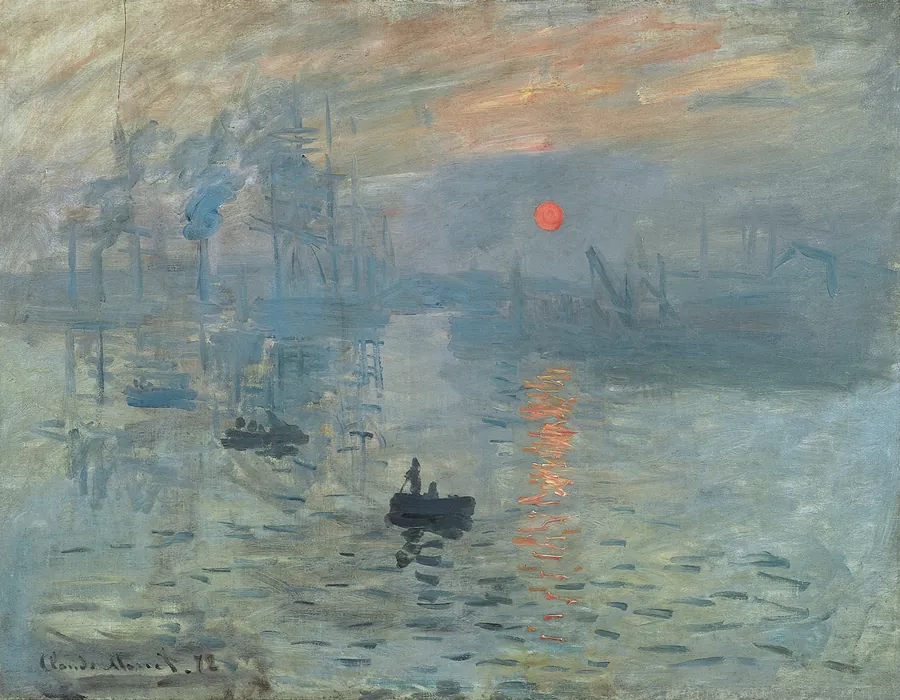
Continue from hereImpression, Sunrise
Claude Monet · 1872
The port is not yet fully awake; a bright orange sun first lights the morning.
↗01 → 02The orange sun lasts only an instant over the harbor. Next, that fleeting light moves into windblown fabric and grass.
DAY02
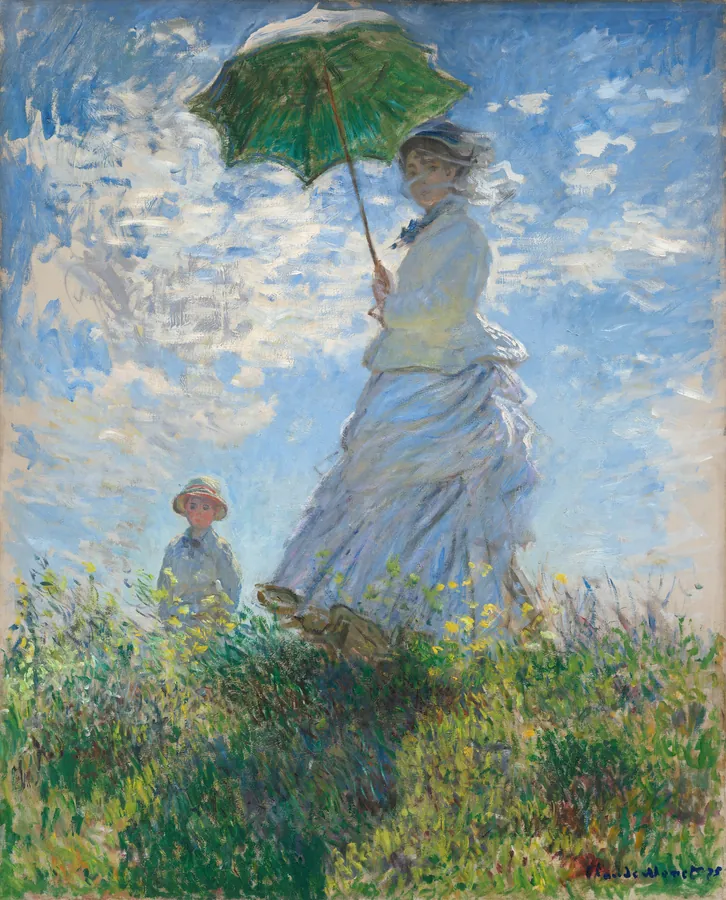
Waiting for youWoman with a Parasol — Madame Monet and Her Son
Claude Monet · 1875
Wind blows through the skirt, grass, and clouds; the figure seems to continue moving in the next moment.
↗02 → 03Once the figure leaves, color does not become quieter. Roofs, trees, and fields begin to build space through colored planes.
DAY03
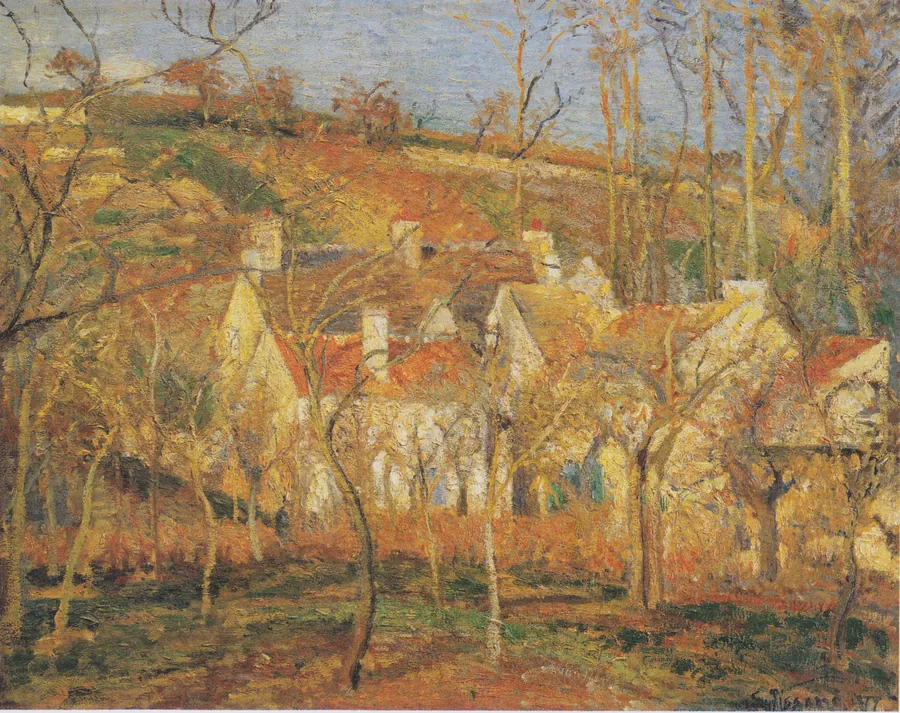
Waiting for youRed Roofs, Corner of a Village, Winter
Camille Pissarro · 1877
In winter, a village isn’t gray; red roofs peek from tree branches, warm and low-key.
↗03 → 04Pissarro still lets the brush follow the landscape. Seurat breaks the brushmark into dots and asks your eye to mix them.
DAY04
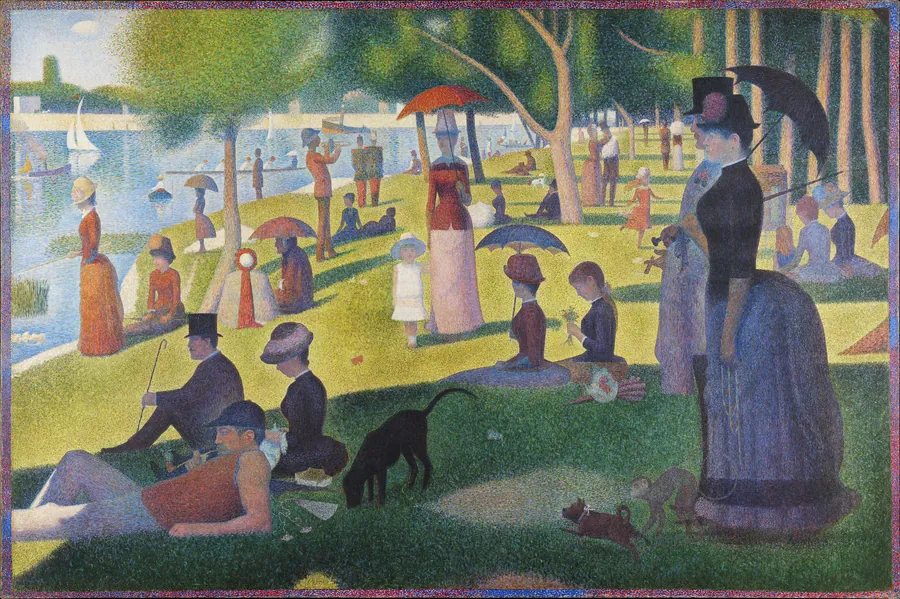
Waiting for youA Sunday on La Grande Jatte — 1884
Georges Seurat · 1884–1886
Countless tiny dots form a nearly still afternoon, making the bustle seem strange.
↗04 → 05Pointillism holds an afternoon still. Cézanne then uses color to search for the mountain’s weight and structure.
DAY05
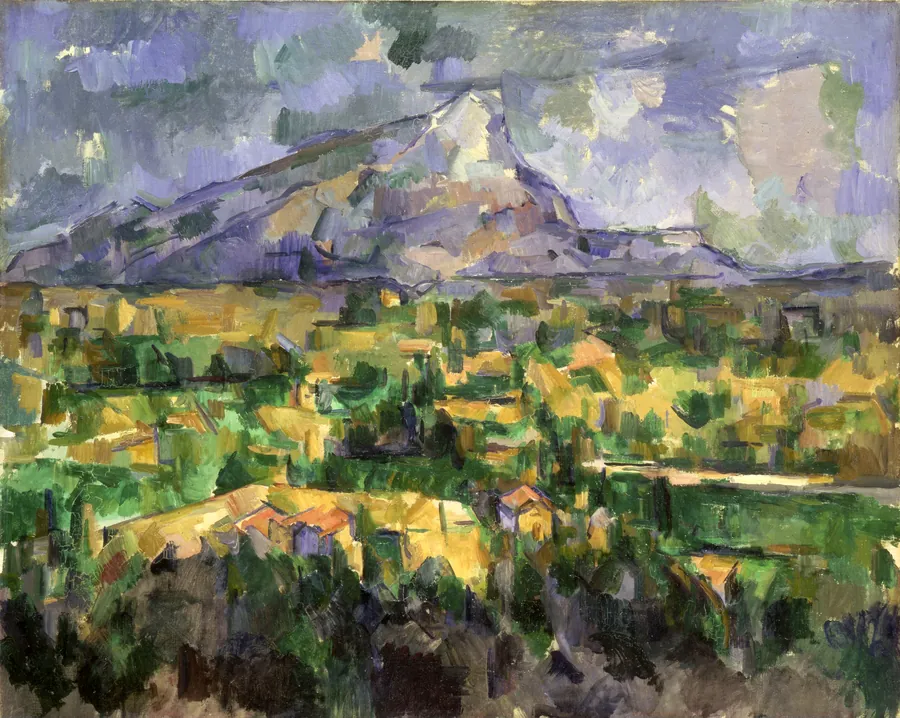
Waiting for youMont Sainte-Victoire
Paul Cézanne · c. 1902–1904
Mountains, trees, and houses are broken into color blocks; the landscape seems to be reassembled before your eyes.
↗05 → 06One mountain is built from short brushstrokes; the next is compressed into a clear contour and a broad red plane.
DAY06
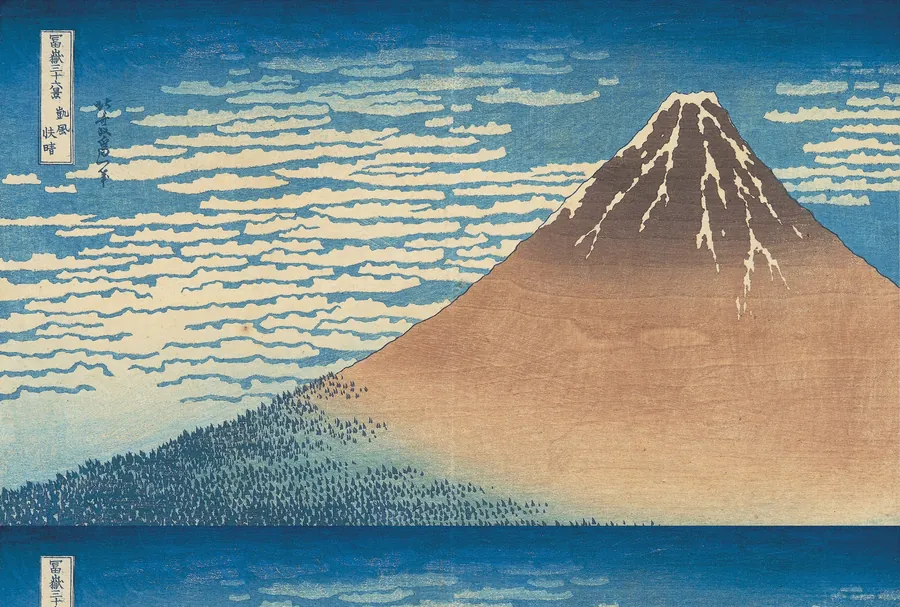
Waiting for youFine Wind, Clear Morning
Katsushika Hokusai · circa 1831–1833
Fuji Mountain nearly fills the frame, its early morning red giving a familiar peak an almost palpable warmth.
↗06 → 07Flat color organizes the landscape in ukiyo-e and influenced European artists. Klimt lets flatness, gold, and pattern surround the figures.
DAY07
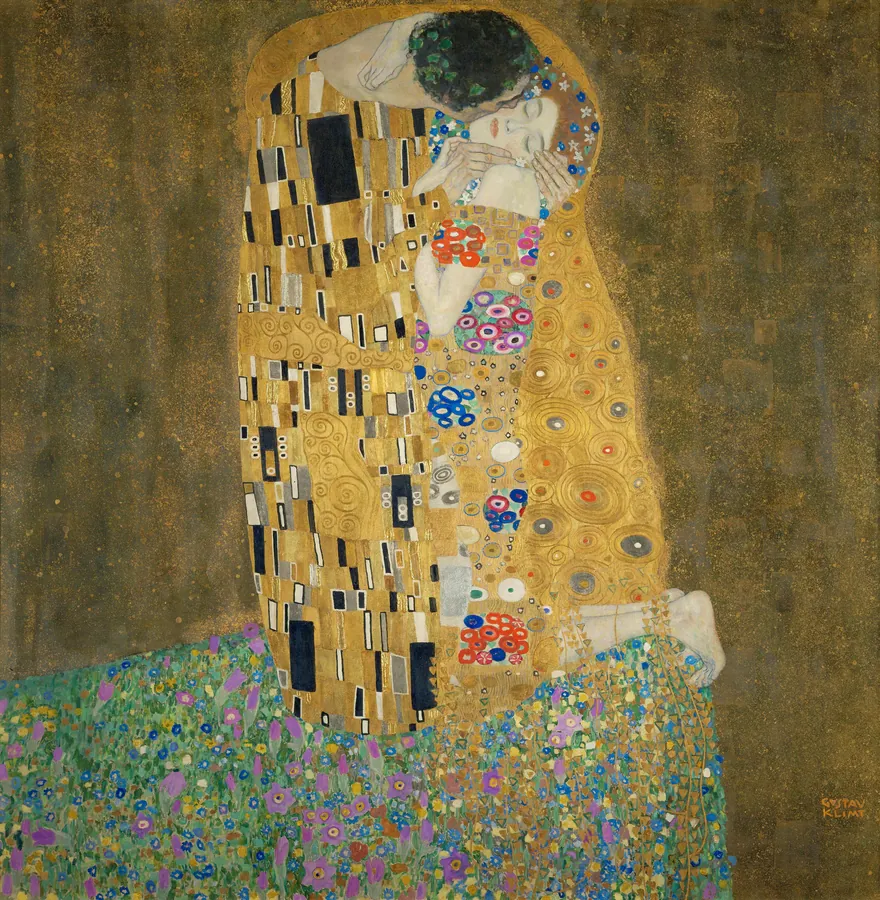
Waiting for youThe Kiss
Gustav Klimt · 1907–1908
Two figures are surrounded by golden patterns; their bodies almost merge into the embrace.
↗07 → 08Gold still clings to an embrace and its garments. With Matisse, red no longer decorates the room—it nearly becomes the room itself.
DAY08
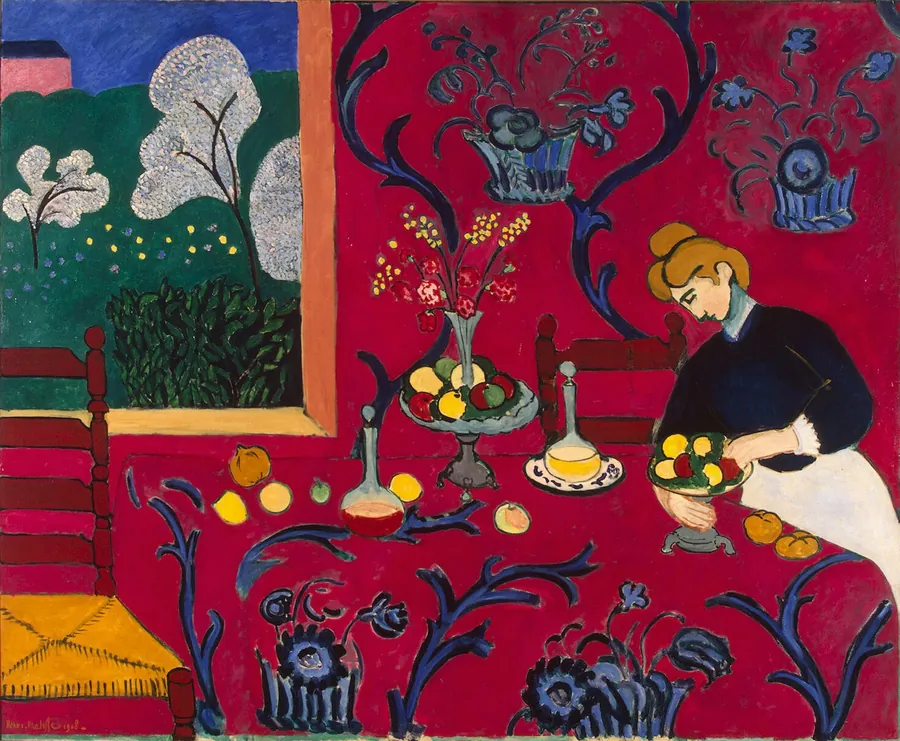
Waiting for youThe Red Room (Harmony in Red)
Henri Matisse · 1908
Red spills over table and wall edges, reorganizing the room in one color field.
↗This journey ends here
0102030405060708
You began with color describing morning light, passed through optical mixture, structural color, and ornament, and arrived in a room ruled by red. Color never abandoned reality; it gradually gained the power to organize it.