What happened
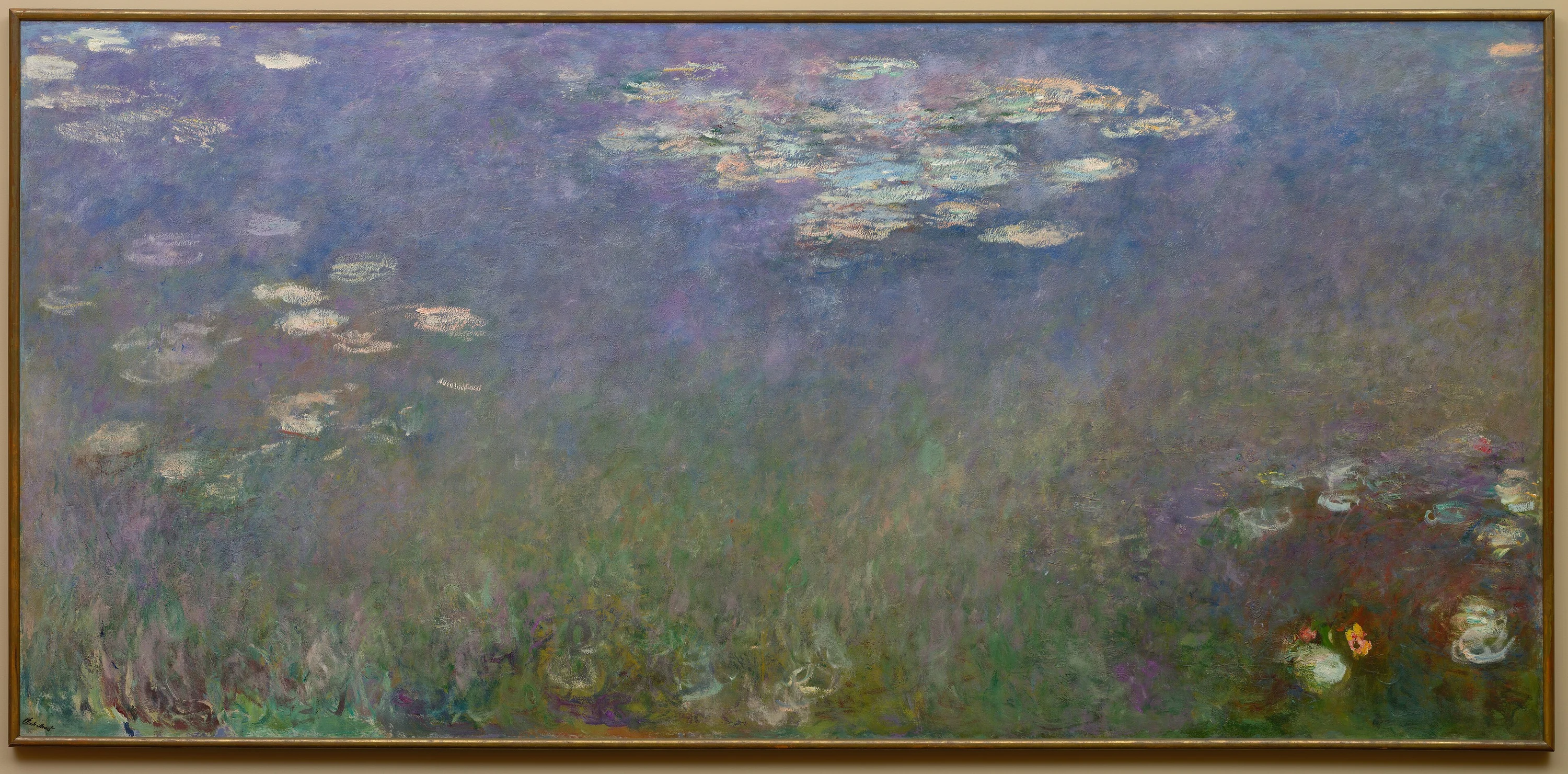
Late in his career, Monet returned to the water lilies at Giverny again and again. Repetition isn’t about unchanging scenery; it’s about light changing every moment.
Cleveland Museum of Art Open Access · CC0 1.0 · Artwork details appear later
A moment for the eye to rest
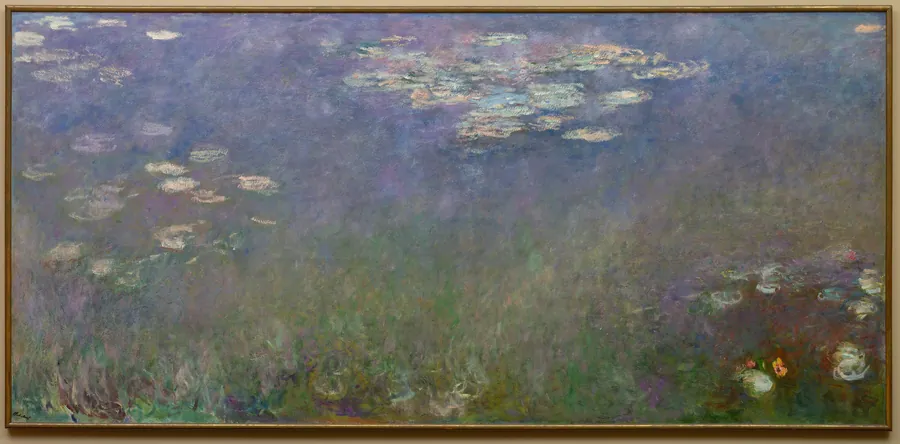
Water Lilies (Agapanthus) · The details can wait a little longer
FEEL
UNDERSTAND
Digital image: Cleveland Museum of Art Open Access · CC0 1.0 · commercial use permitted · View source ↗
Late in his career, Monet returned to the water lilies at Giverny again and again. Repetition isn’t about unchanging scenery; it’s about light changing every moment.
The horizon and shore are omitted. The surface fills the view, replacing traditional landscape perspective with a nearly boundless space.
Though not directly painted, the sky appears from the water’s pale blue, violet-gray, and bright strokes. Light becomes intangible in reflection.
Blues, greens, and purples blend; pink-white lilies are fleeting pauses. Colors no longer obey object boundaries but flow across the canvas.
This painting was part of Monet’s large-scale water lily project. Though separated for collection, it retains mural-like scale surrounding viewers.
When you stop trying to identify the pond, leaves, or sky, colors become spaces that can be entered.
What did it leave with you?
Where next · WHERE TO
Not more of the same—just three possible paths.
Stay nearby · water surface
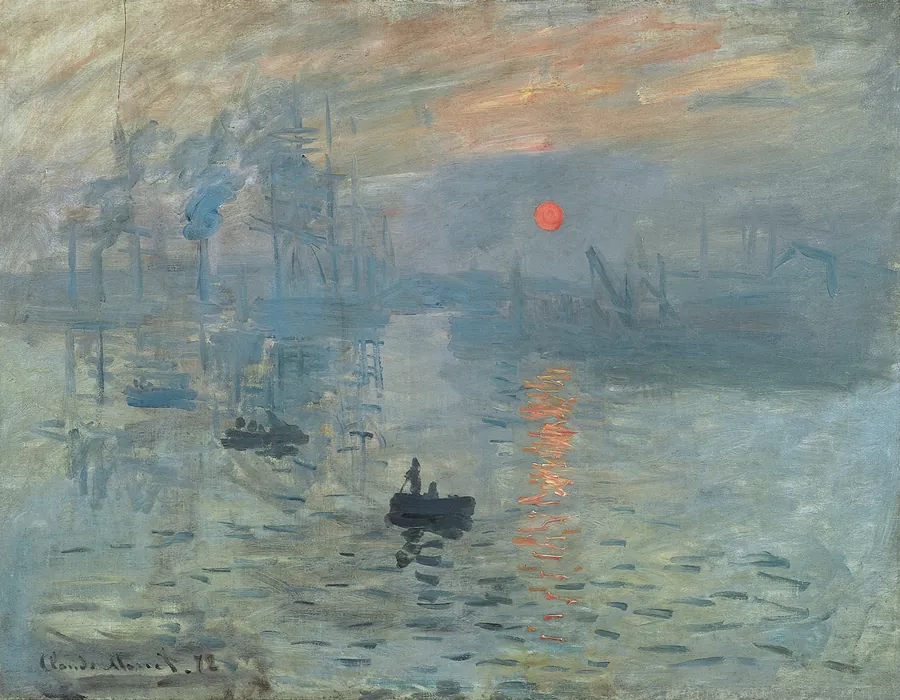
Claude Monet · 1872
returning to Monet’s early, thinner, more distant water
Go farther · garden
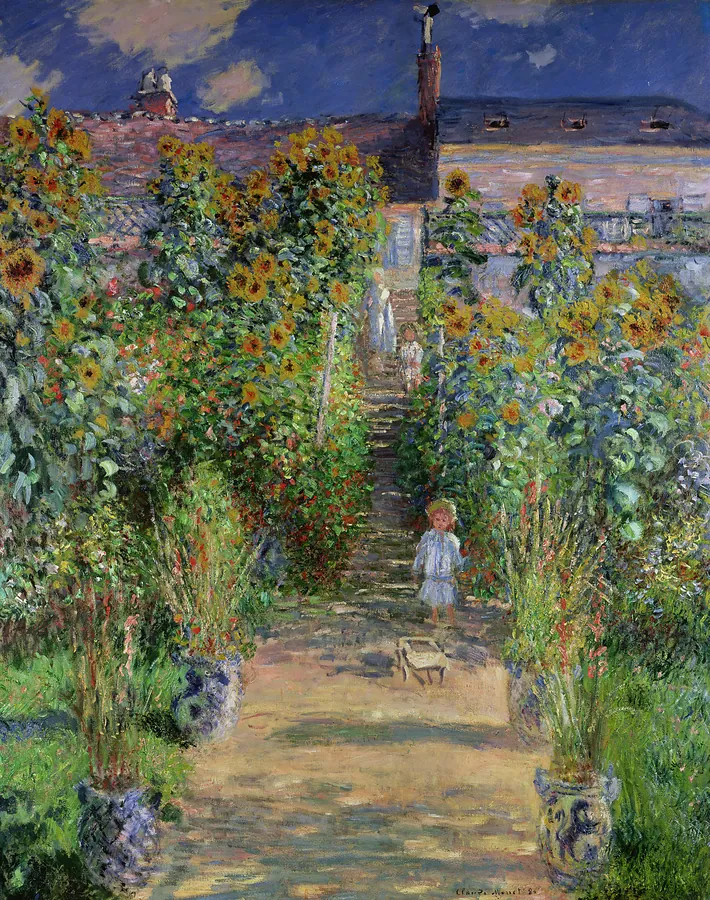
Claude Monet · 1880
tracing back from the boundless reflection to a garden with steps
Change direction · color space
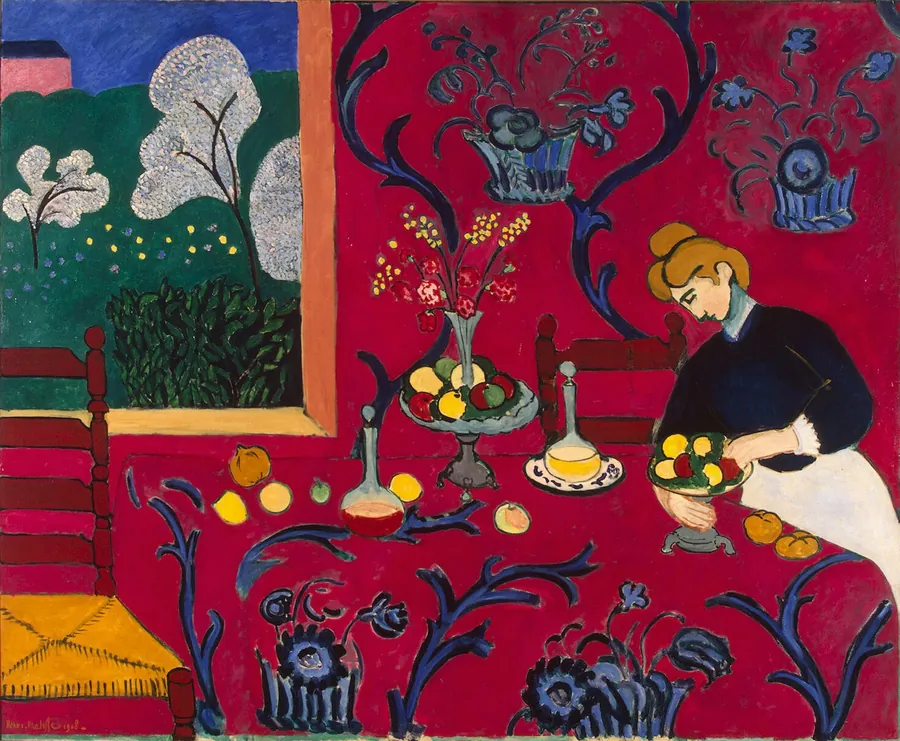
Henri Matisse · 1908
see how color takes over an entire indoor world