What happened
Vincent van Gogh painted this scene on the Rhone riverbank in Arles, facing a real night sky. In the distance was the city; up close were two people walking.
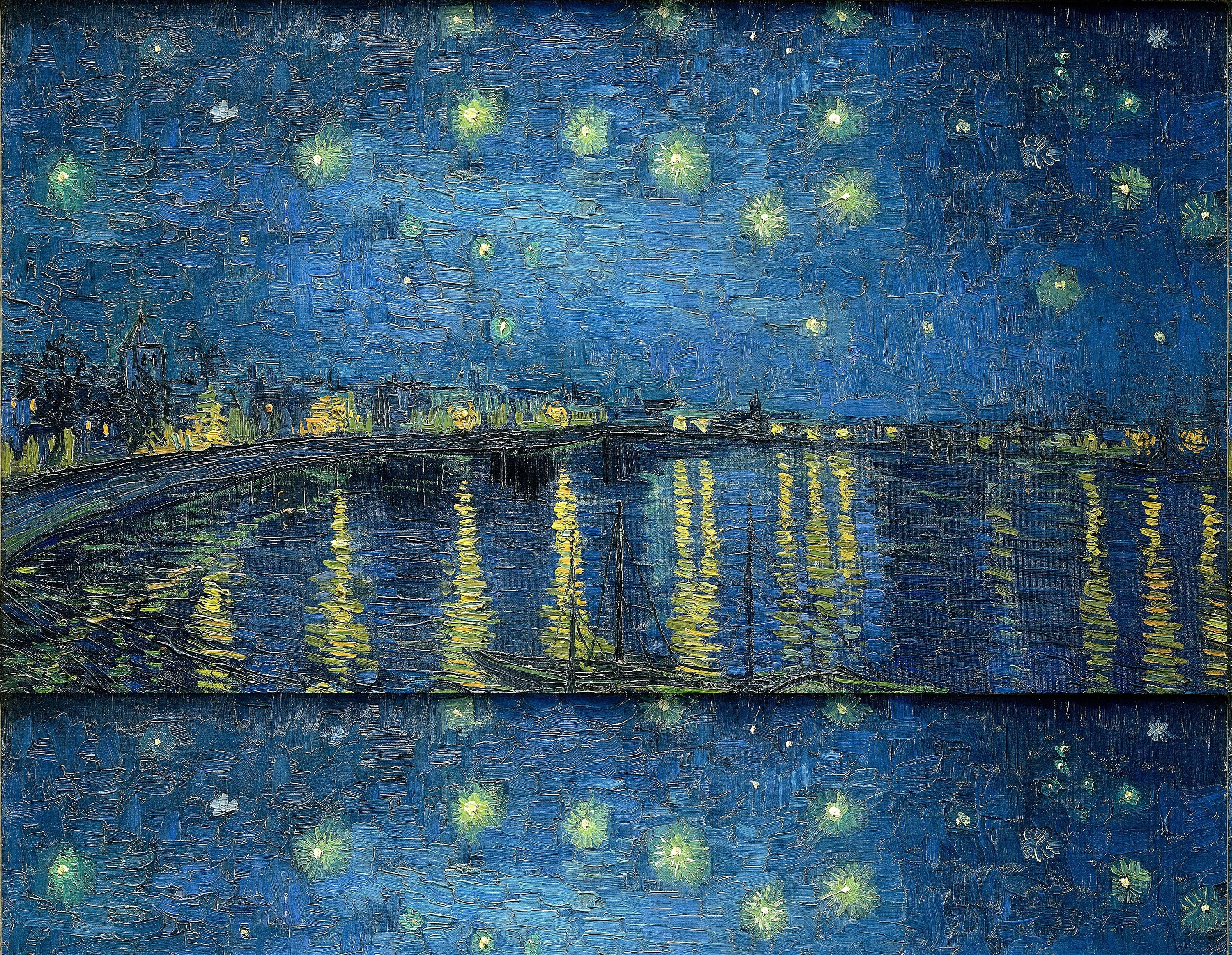
Musée d’Orsay (via Wikimedia Commons) · Public Domain Mark 1.0 · Artwork details appear later
A moment for the eye to rest
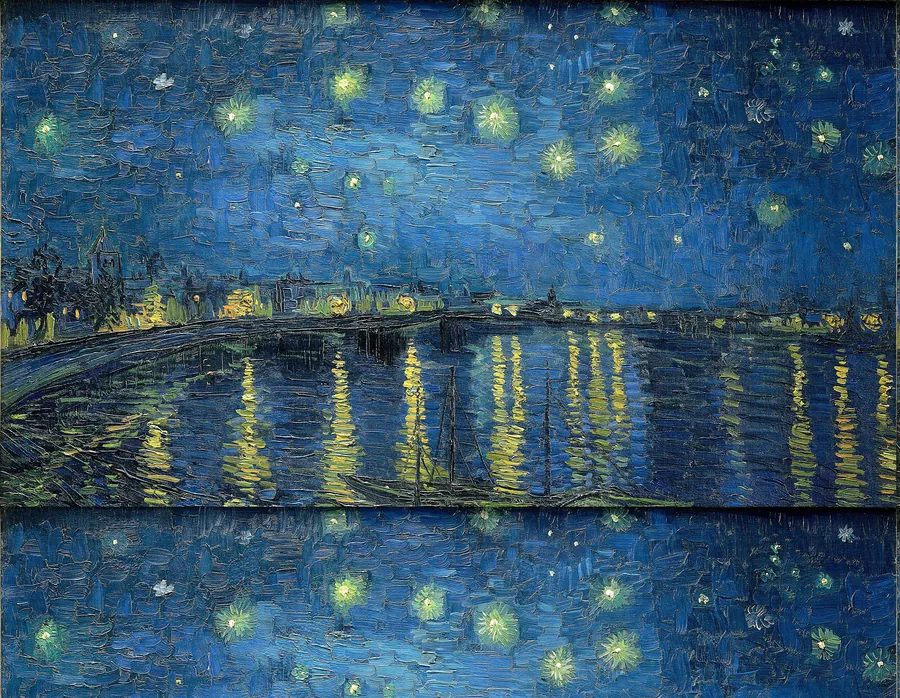
Starry Night Over the Rhône · The details can wait a little longer
FEEL
UNDERSTAND
Digital image: Musée d’Orsay (via Wikimedia Commons) · Public Domain Mark 1.0 · commercial use permitted · View source ↗
Vincent van Gogh painted this scene on the Rhone riverbank in Arles, facing a real night sky. In the distance was the city; up close were two people walking.
The horizon is low, with vast blue skies stretching out; lights’ reflections connect distant and foreground, like paths into the night.
Stars are not alone. Gas lamps repeat themselves on water, responding to natural stars and urban ones.
Cobalt and ultramarine fill sky and water, while lemon yellow and orange concentrate as small but powerful highlights. The cold and warm contrast keeps the night alive.
Completed shortly after 'Night Café Terrace,' it is closer to real-life views than 'Starry Night' yet already lets color carry emotion.
It tells us that nights do not have to be painted in black. The deeper blue makes a small light more visible.
What did it leave with you?
Where next · WHERE TO
Not more of the same—just three possible paths.
Stay nearby · blue and yellow
_1888.jpg)
Vincent van Gogh · 1888
From riverbank back to a warm little light
Go farther · starlight

Vincent van Gogh · 1889
See how observation becomes inner turmoil
Change direction · water glow
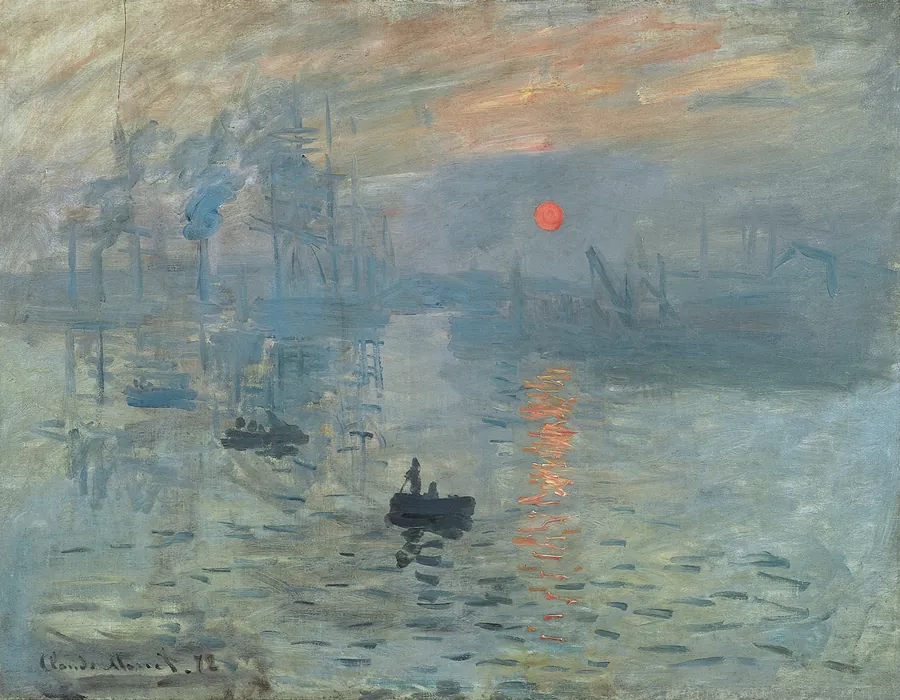
Claude Monet · 1872
Swap night for a morning mist