What happened
Sado coast is a famous spot to view Fuji, also perilous. Hiroshige compresses two travel sensations—danger and grandeur—into one image.
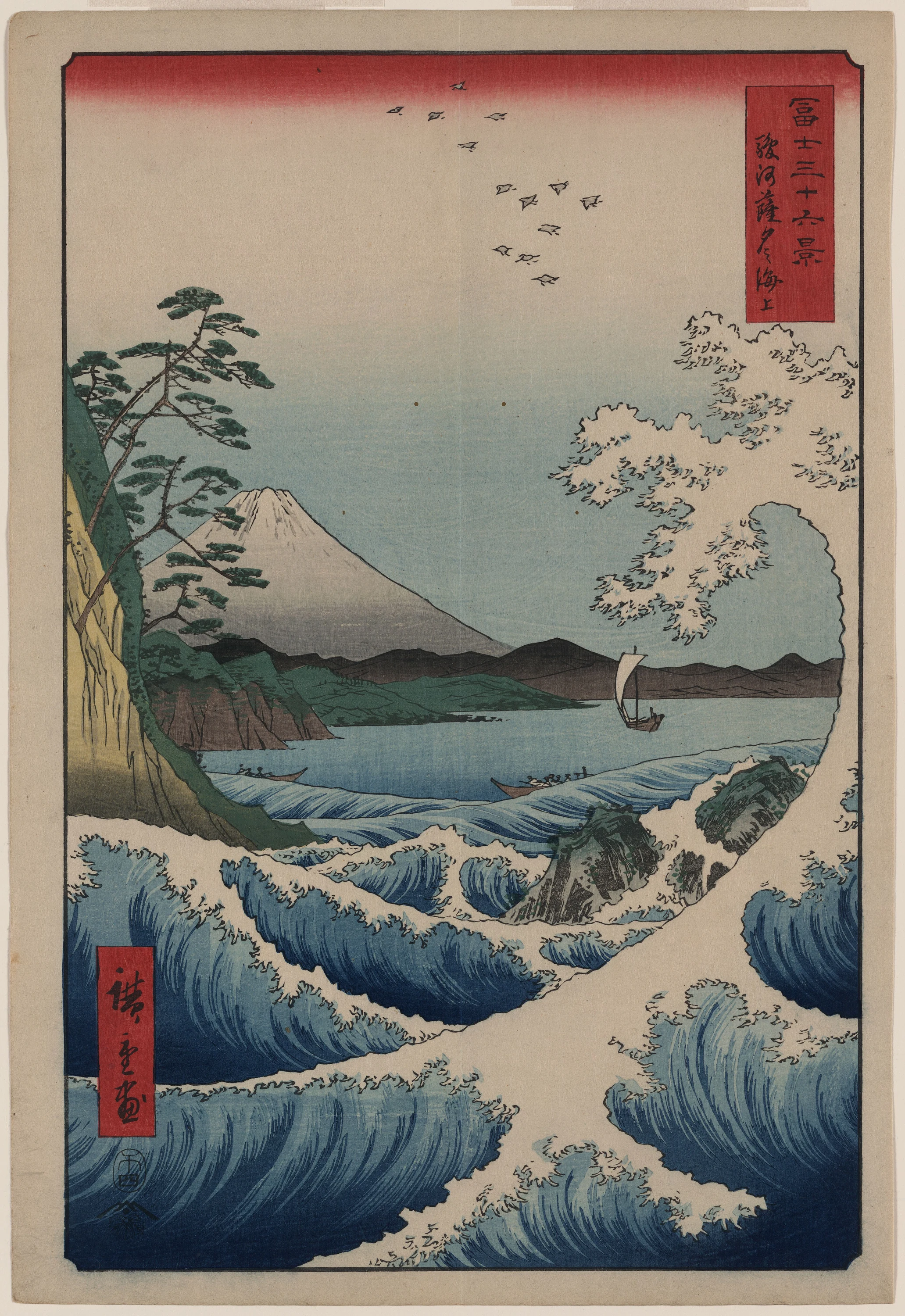
Library of Congress (via Wikimedia Commons) · Public Domain Mark 1.0 · Artwork details appear later
A moment for the eye to rest
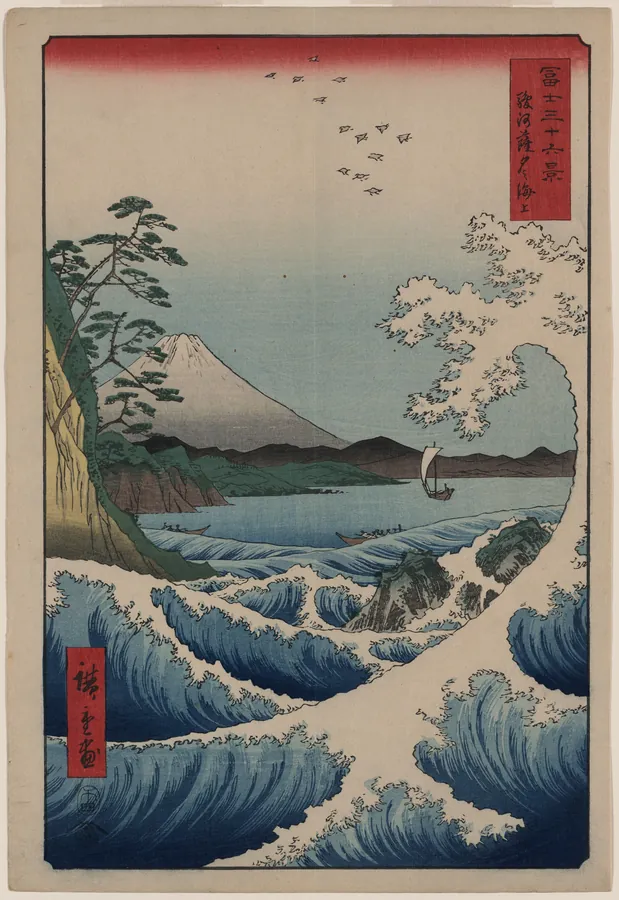
The Sea off Satta in Suruga Province · The details can wait a little longer
FEEL
UNDERSTAND
Digital image: Library of Congress (via Wikimedia Commons) · Public Domain Mark 1.0 · commercial use permitted · View source ↗
Sado coast is a famous spot to view Fuji, also perilous. Hiroshige compresses two travel sensations—danger and grandeur—into one image.
Near waves, cliffs, and distant mountain form three scales. The right cliff pushes the eye left down, while waves return it to central Fuji.
White waves seem frozen in time, making the deep blue sea appear thicker. Farther sky is lighter, keeping Fuji distant yet clear.
Prussian blue from sea to far mountain, green-brown cliffs with white wave tips divide the same blue into different distances.
This work comes from Hiroshige’s later Thirty-Six Views of Mount Fuji series. It echoes Hokusai’s waves but places viewers on steeper coastlines.
Bold composition makes nature more than a backdrop. Colors and shapes create bodily sensations first, making you feel the wave's power before recognizing its location.
What did it leave with you?
Where next · WHERE TO
Not more of the same—just three possible paths.
Stay nearby · waves

Katsushika Hokusai · circa 1831
Compares how two masters elevate sea waves
Go farther · Fuji
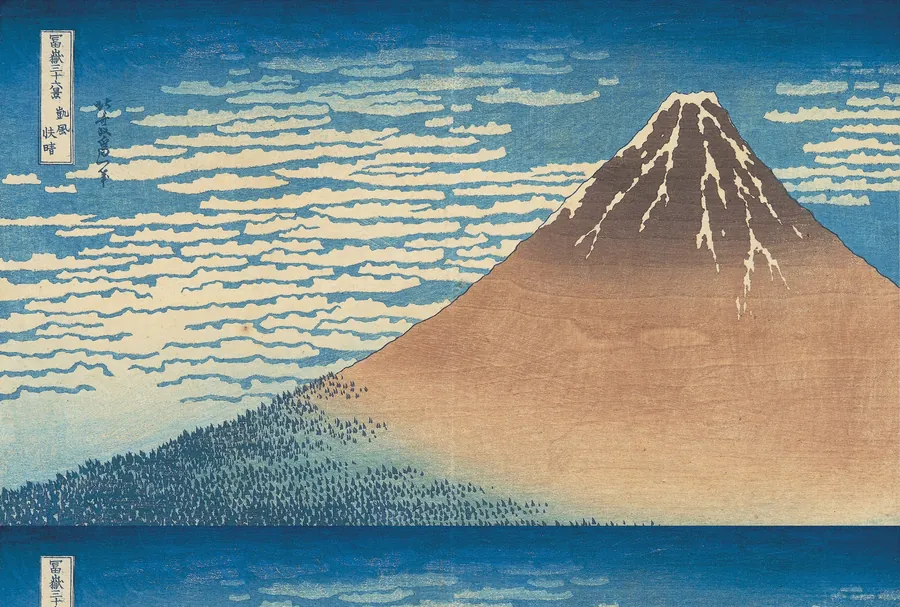
Katsushika Hokusai · circa 1831–1833
Brings distant mountains closer, filling the frame
Change direction · Hiroshige’s weather
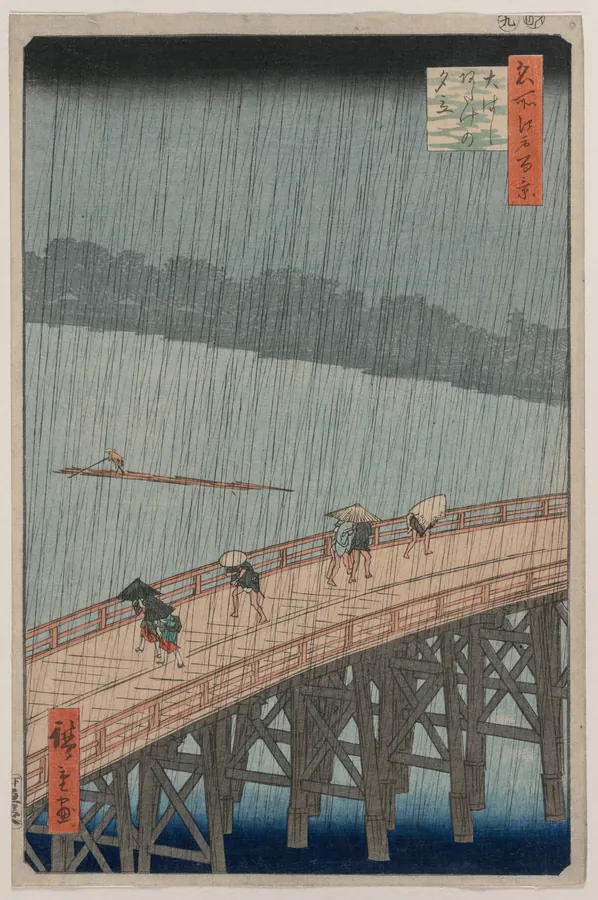
Utagawa Hiroshige · 1857
Moves from sea breeze to a sudden downpour