What happened
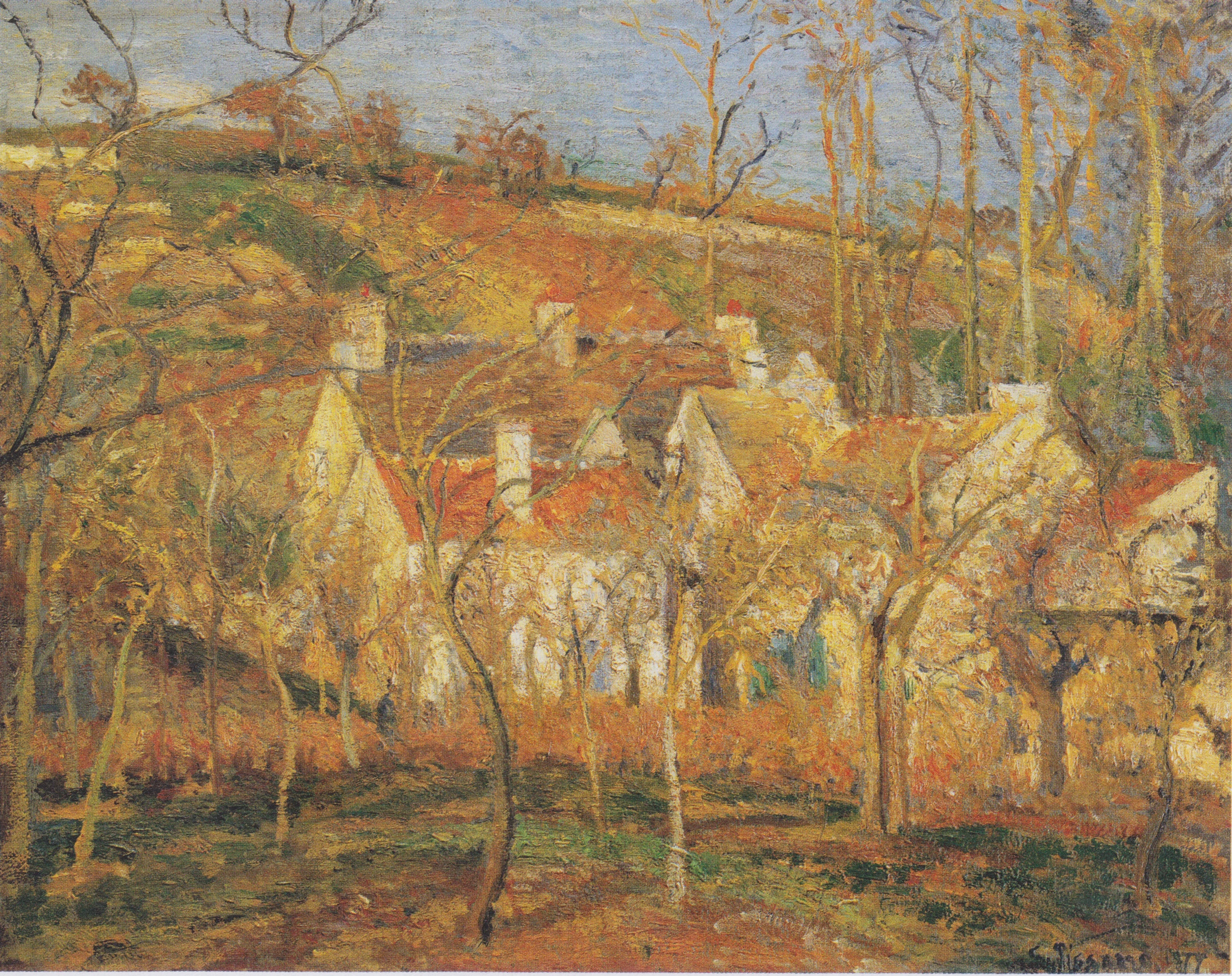
Pissarro painted a common village near Pontoise. No grand views, just winter trees, roofs, and rolling land.
Musée d’Orsay (via Wikimedia Commons) · Public Domain Mark 1.0 · Artwork details appear later
A moment for the eye to rest
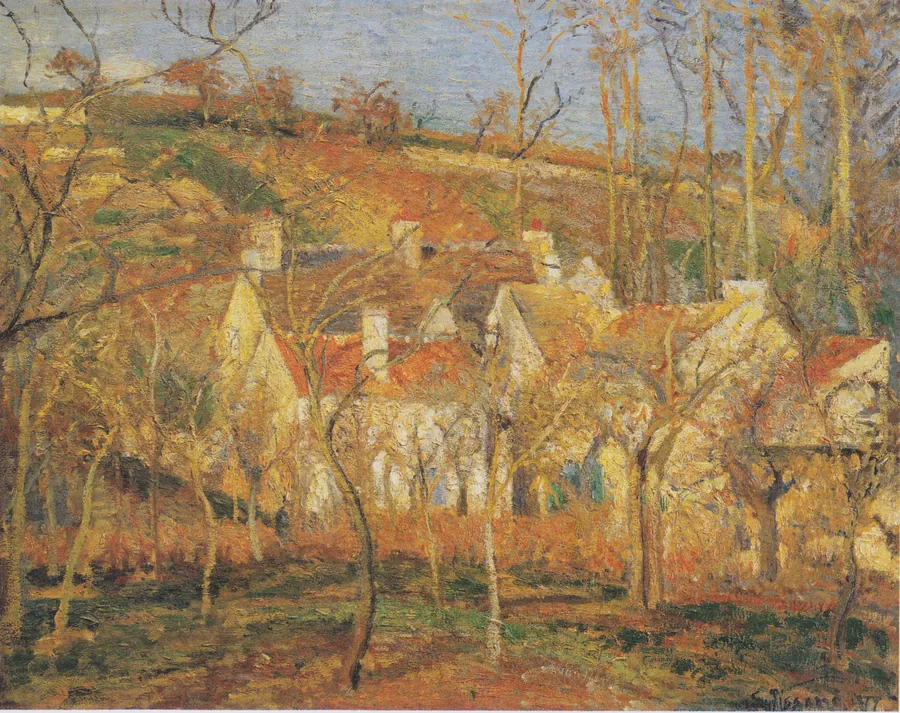
Red Roofs, Corner of a Village, Winter · The details can wait a little longer
FEEL
UNDERSTAND
Digital image: Musée d’Orsay (via Wikimedia Commons) · Public Domain Mark 1.0 · commercial use permitted · View source ↗
Pissarro painted a common village near Pontoise. No grand views, just winter trees, roofs, and rolling land.
Tree trunks divide the scene into irregular windows; red roofs appear from gaps. Obstructions make space feel more real and layered.
Winter light is soft, colors lack strong shadows. Light is broken into short brushstrokes, keeping air slightly vibrating.
The brick-red roofs are the warmest area in the painting, surrounded by gray-green and blue-violet tones, making them stand out without being harsh.
Pissarro often painted city outskirts and rural labor scenes. He brought modern changes to ordinary places.
Colors don’t need loud expression. A few restrained reds can make us notice a village we might overlook.
What did it leave with you?
Where next · WHERE TO
Not more of the same—just three possible paths.
Stay nearby · structural color blocks
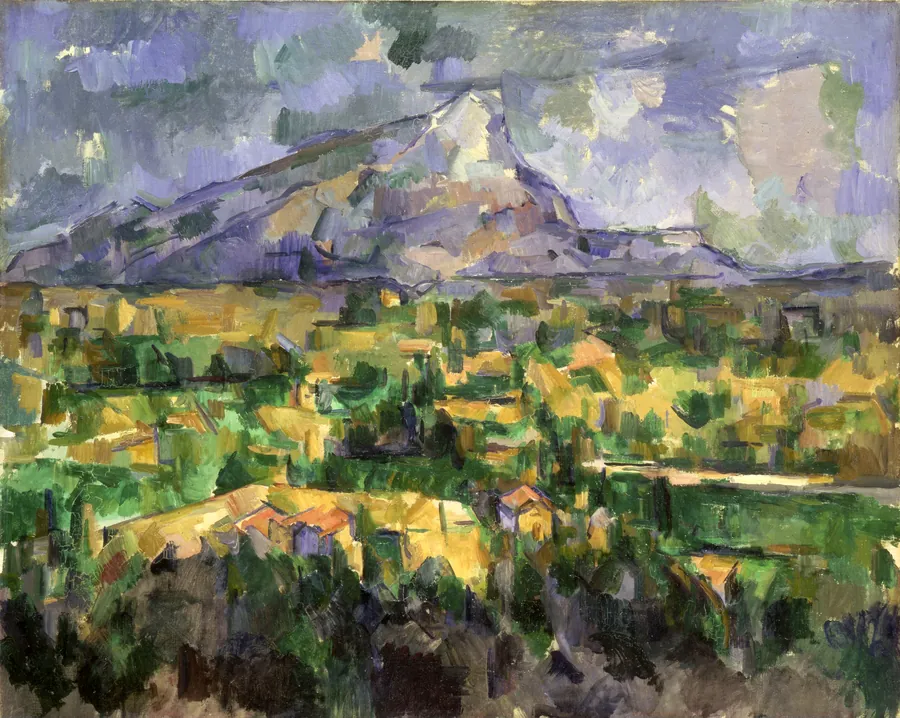
Paul Cézanne · c. 1902–1904
From village roofs to an entire mountain reassembled
Go farther · side-by-side colors
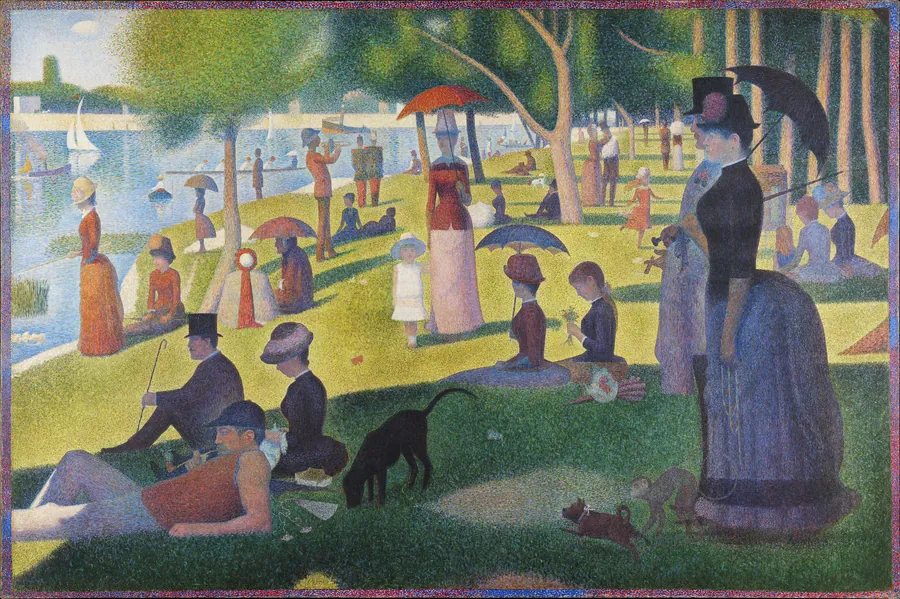
Georges Seurat · 1884–1886
See how dots become a stricter visual method
Change direction · winter village
%20-%20Google%20Art%20Project.jpg?width=1600)
Pieter Bruegel the Elder · 1565
See another older, colder roof