What happened
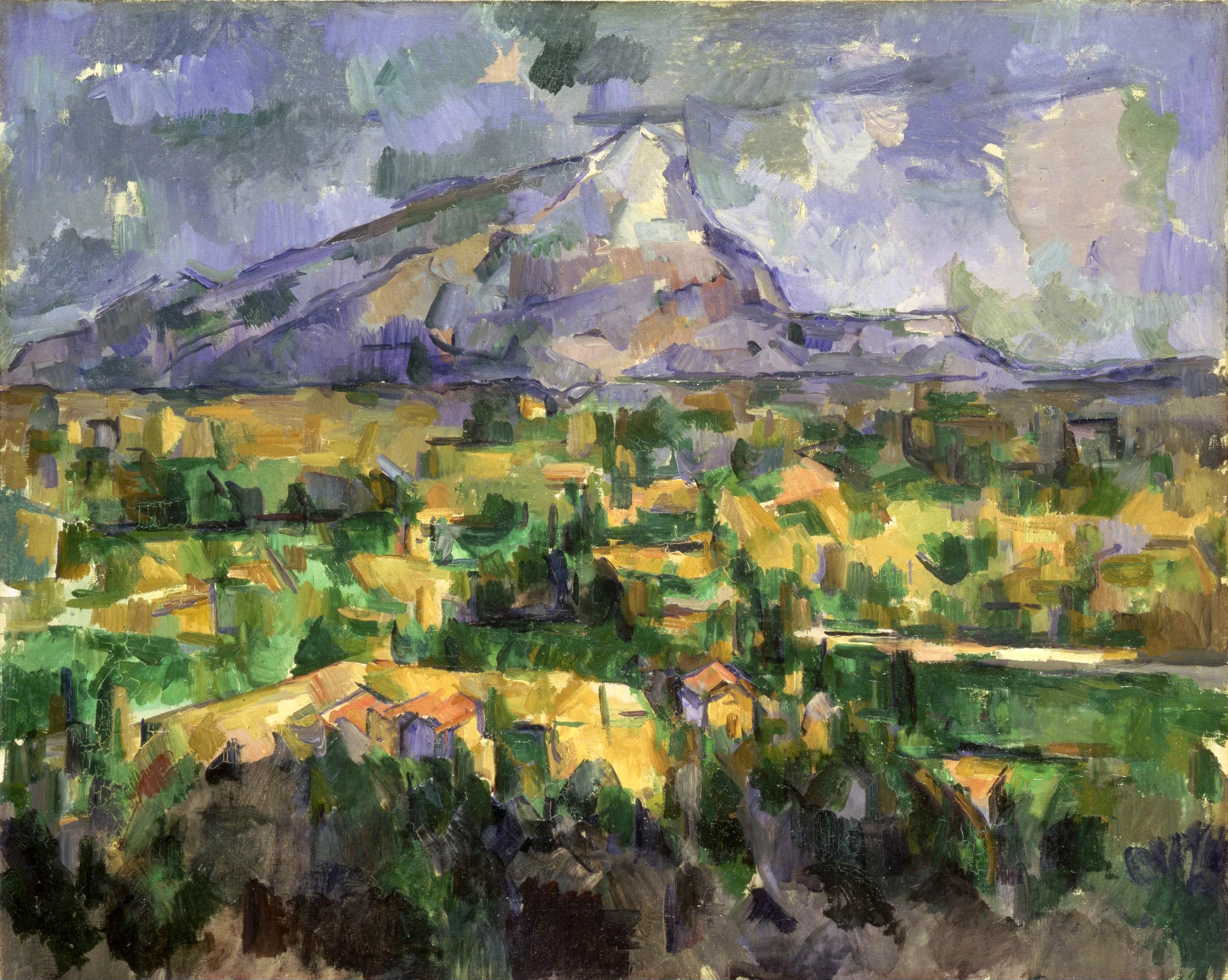
Cézanne repeatedly painted the nearby Mont Sainte-Victoire from different angles. Familiarity let him question how he saw rather than chase views.
Philadelphia Museum of Art (via Wikimedia Commons) · Public Domain Mark 1.0 · Artwork details appear later
A moment for the eye to rest
Mont Sainte-Victoire · The details can wait a little longer
FEEL
UNDERSTAND
Digital image: Philadelphia Museum of Art (via Wikimedia Commons) · Public Domain Mark 1.0 · commercial use permitted · View source ↗
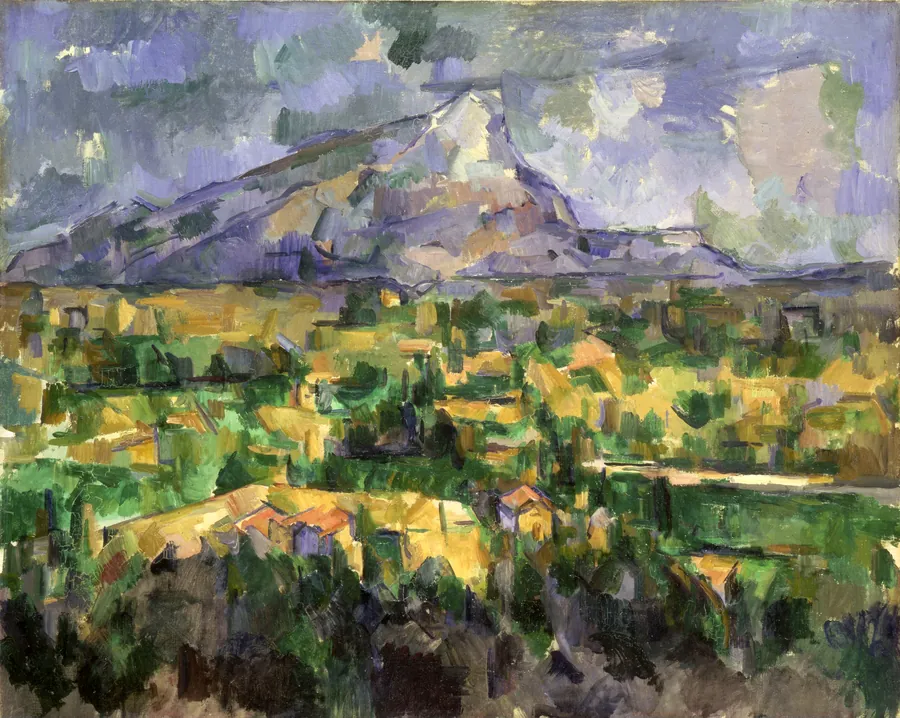
Cézanne repeatedly painted the nearby Mont Sainte-Victoire from different angles. Familiarity let him question how he saw rather than chase views.
Foreground trees frame like stage edges; midground houses and fields are compressed into slanted planes, while distant mountains stabilize with large triangular shapes.
Light is not evenly spread but broken into adjacent cool-warm color planes. Each stroke is both light and a small structural element.
Blue enters the mountain body, green enters the sky, brown-red dots appear on rooftops and fields. Colors cross object boundaries, re-connecting space.
Cézanne sought balance between natural momentary sensations and lasting structure. His block language deeply influenced later Cubism.
This painting shows colors can carry weight, distance, and direction like building blocks organizing the world.
What did it leave with you?
Where next · WHERE TO
Not more of the same—just three possible paths.
Stay nearby · mountains
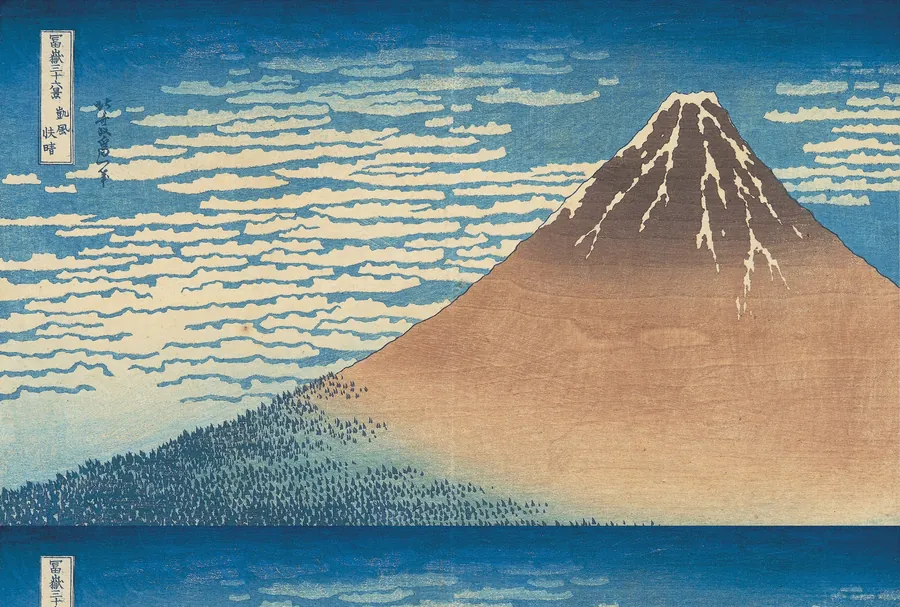
Katsushika Hokusai · circa 1831–1833
Compare flat color blocks with structured brushstrokes
Go farther · village color blocks
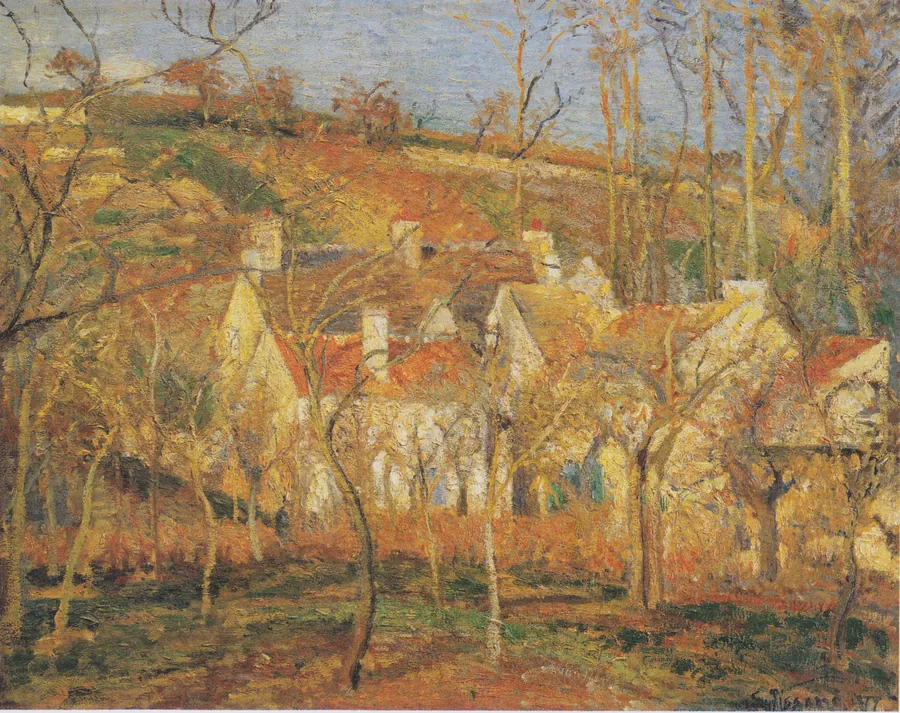
Camille Pissarro · 1877
Return to looser, more shimmering Impressionist village
Change direction · color beyond realism
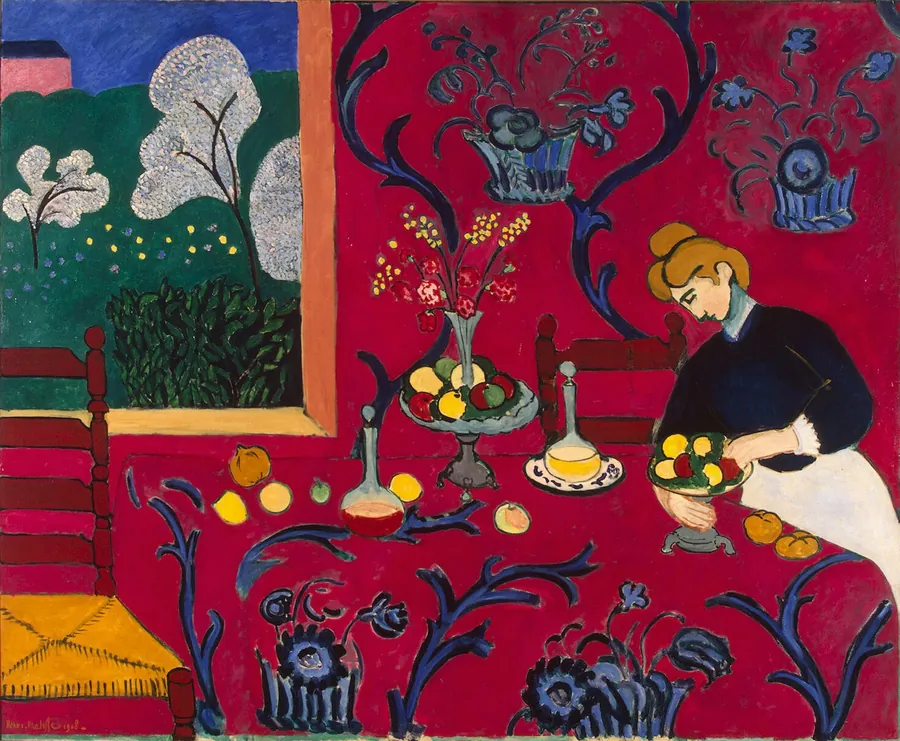
Henri Matisse · 1908
Continue towards interiors almost free of perspective