What happened
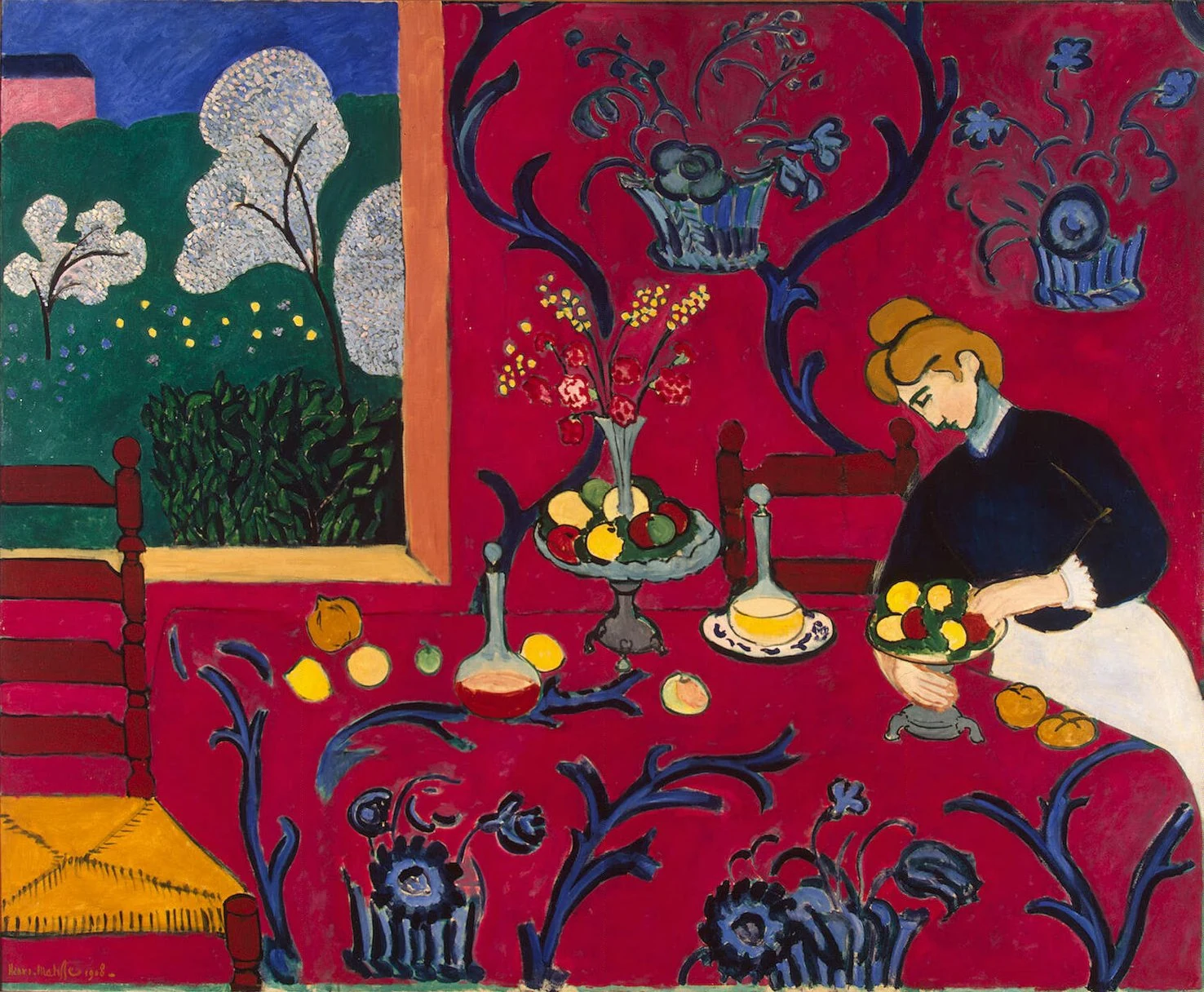
A woman arranges fruit at a table, an ordinary scene. Matisse covered the room in red, making daily space into one visual world.
State Hermitage Museum (via Wikimedia Commons) · Public Domain Mark 1.0 · Artwork details appear later
A moment for the eye to rest
The Red Room (Harmony in Red) · The details can wait a little longer
FEEL
UNDERSTAND
Digital image: State Hermitage Museum (via Wikimedia Commons) · Public Domain Mark 1.0 · commercial use permitted · View source ↗
A woman arranges fruit at a table, an ordinary scene. Matisse covered the room in red, making daily space into one visual world.
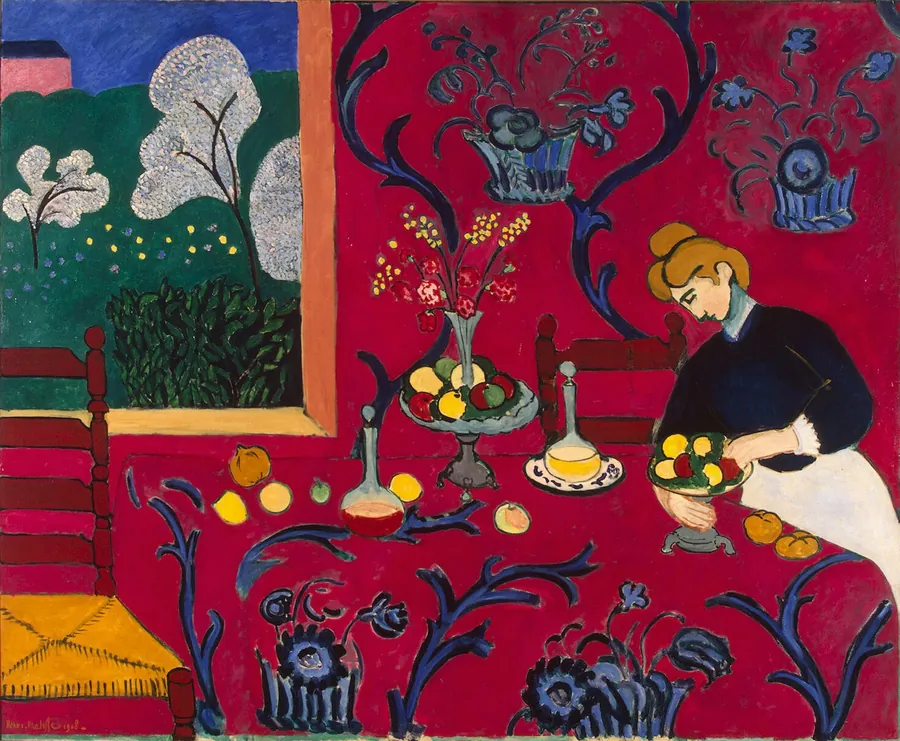
Traditional perspective is flattened with minimal lines separating tabletop and walls. Blue patterns cross boundaries, stitching different surfaces together.
No clear light source or heavy shadows. Objects exist by color contrast, so the room feels detached from any specific moment.
Red isn’t just a tablecloth or wall color but dominates the space. Blue curves and green windows deepen and animate red.
Matisse changed the originally blue interior to red during painting. This decision shifted colors from depicting reality to dominating the picture.
When color crosses object boundaries, it’s no longer just ‘like something’. We start feeling how red makes space, rhythm, and mood.
What did it leave with you?
Where next · WHERE TO
Not more of the same—just three possible paths.
Stay nearby · Matisse
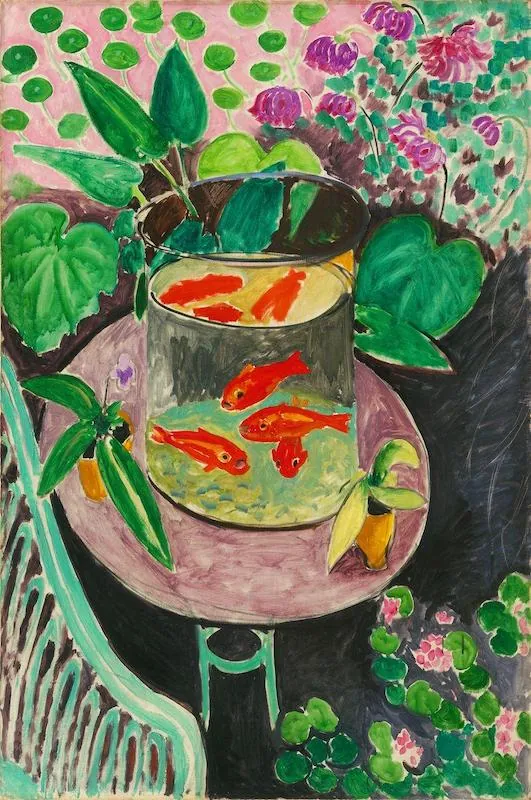
Henri Matisse · 1912
Move from whole red to one orange focus
Go farther · flat space
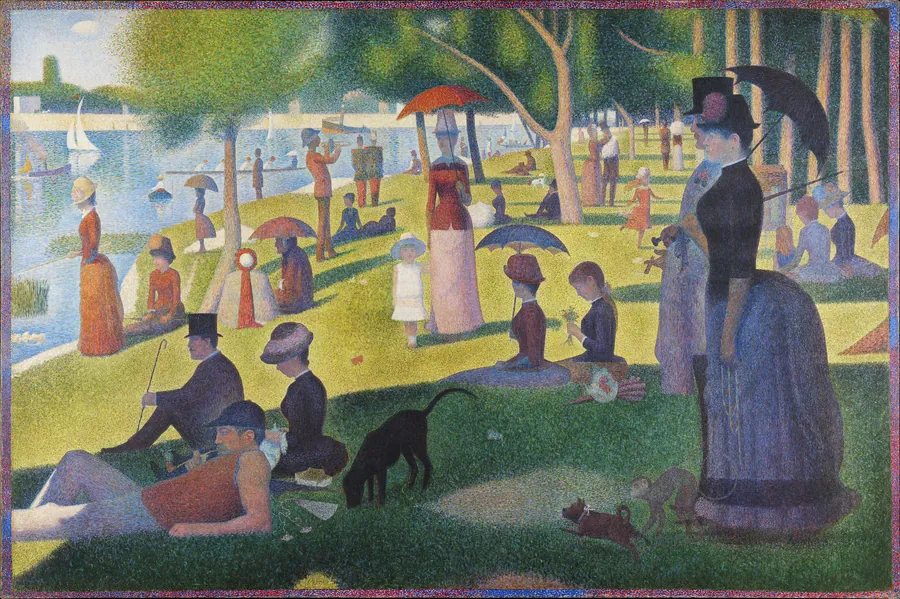
Georges Seurat · 1884–1886
Compare strict order with free patterned flatness
Change direction · ornamentation
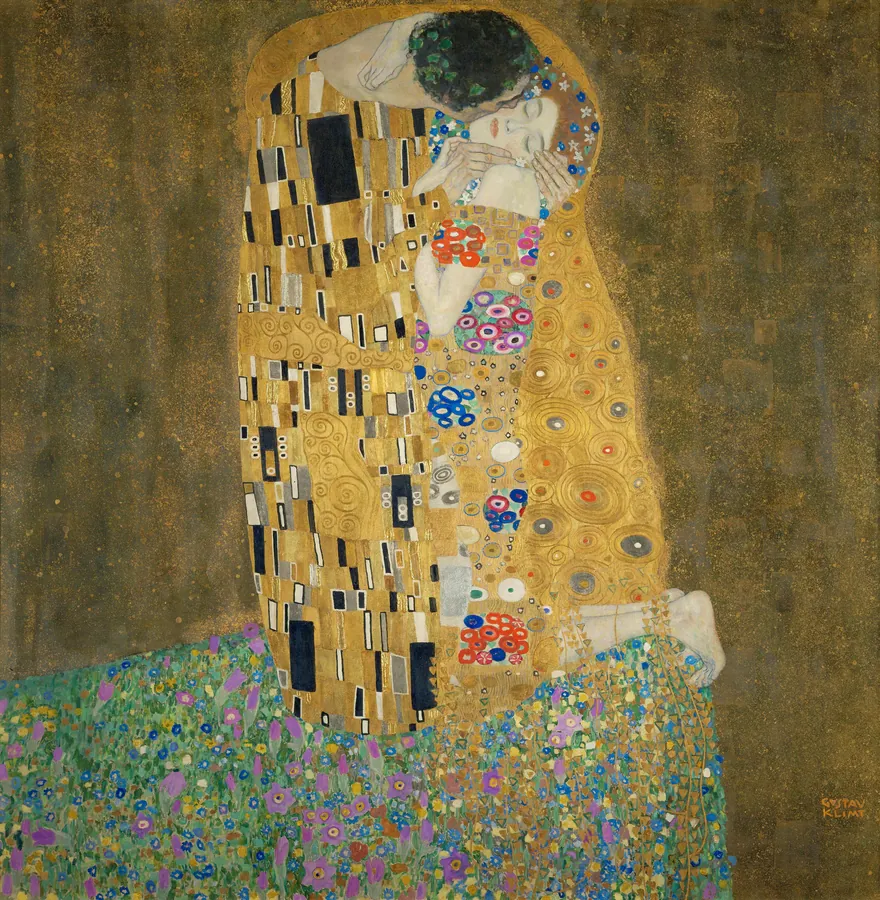
Gustav Klimt · 1907–1908
Step into another golden, patterned space