What happened
Visitors stroll and rest on Île de la Cité. Seurat didn't capture a moment but spent two years reorganizing this Sunday afternoon.
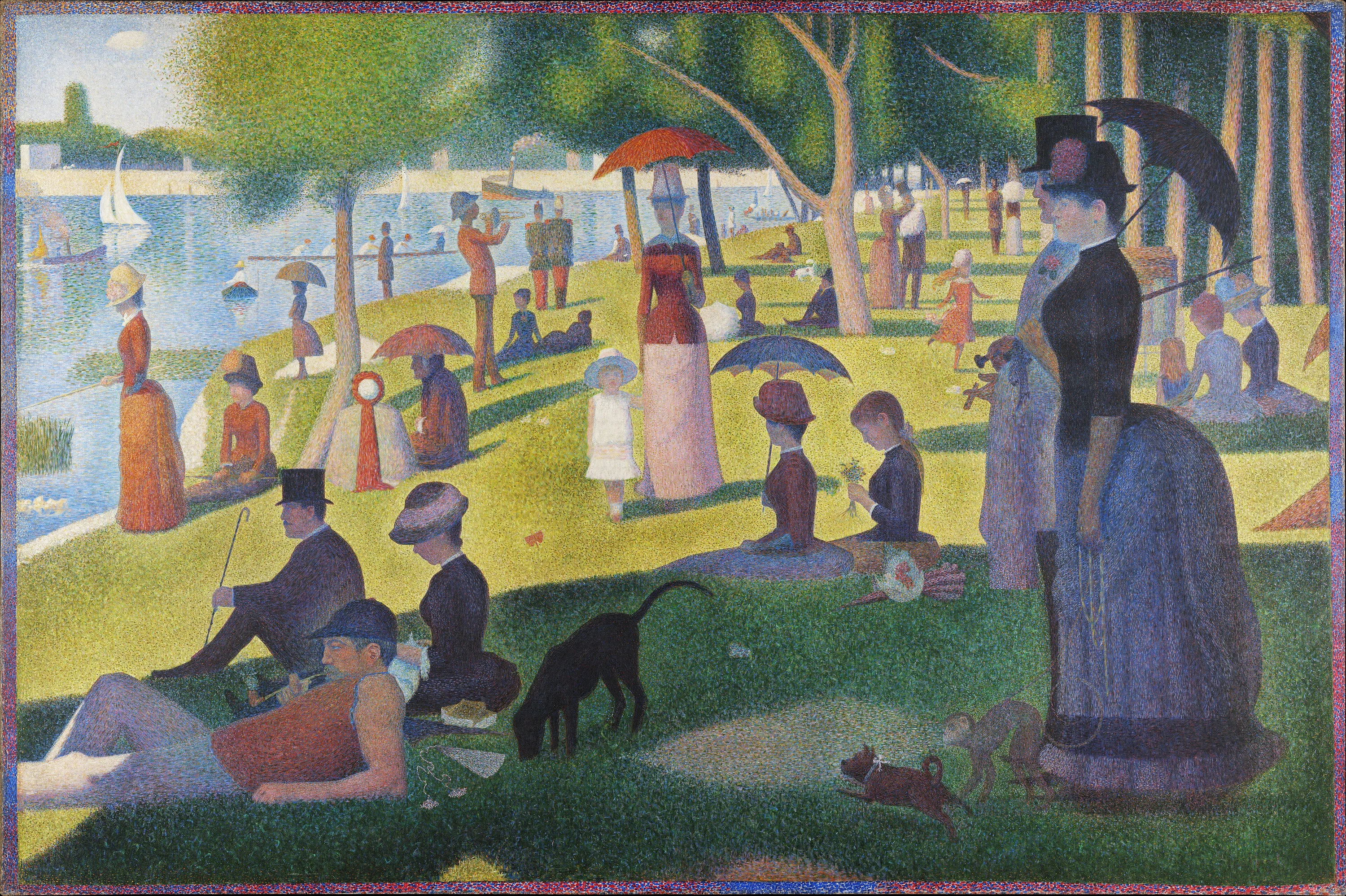
Art Institute of Chicago (via Wikimedia Commons) · Public Domain Mark 1.0 · Artwork details appear later
A moment for the eye to rest
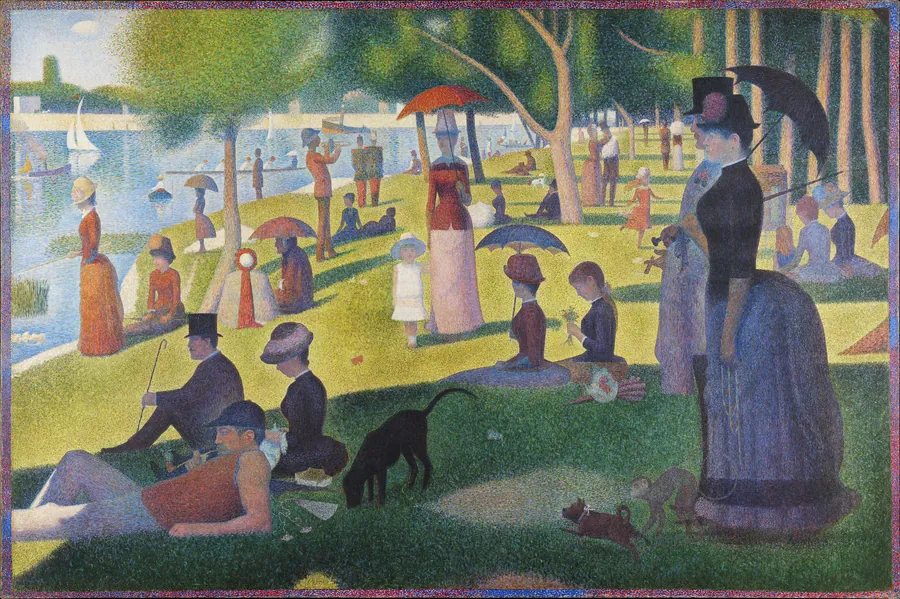
A Sunday on La Grande Jatte — 1884 · The details can wait a little longer
FEEL
UNDERSTAND
Digital image: Art Institute of Chicago (via Wikimedia Commons) · Public Domain Mark 1.0 · commercial use permitted · View source ↗
Visitors stroll and rest on Île de la Cité. Seurat didn't capture a moment but spent two years reorganizing this Sunday afternoon.
Figures mostly face or side to the viewer, forming a stable grid with horizontal riverbank and vertical bodies. People are close together but rarely truly see each other.
Sunlight and shadows are broken into many parallel dots. Step back and your eyes mix them into light.
Seurat didn't mix colors on his palette; instead, blue meets orange, red meets green in adjacent patches. Colors vibrate in the viewer's eye.
This method combined contemporary color science with classical compositional ideals, later known as Neo-Impressionism or Pointillism.
Colors aren't just painterly materials but an interactive process for viewers. Your distance changes what you see.
What did it leave with you?
Where next · WHERE TO
Not more of the same—just three possible paths.
Stay nearby · Sunday crowds
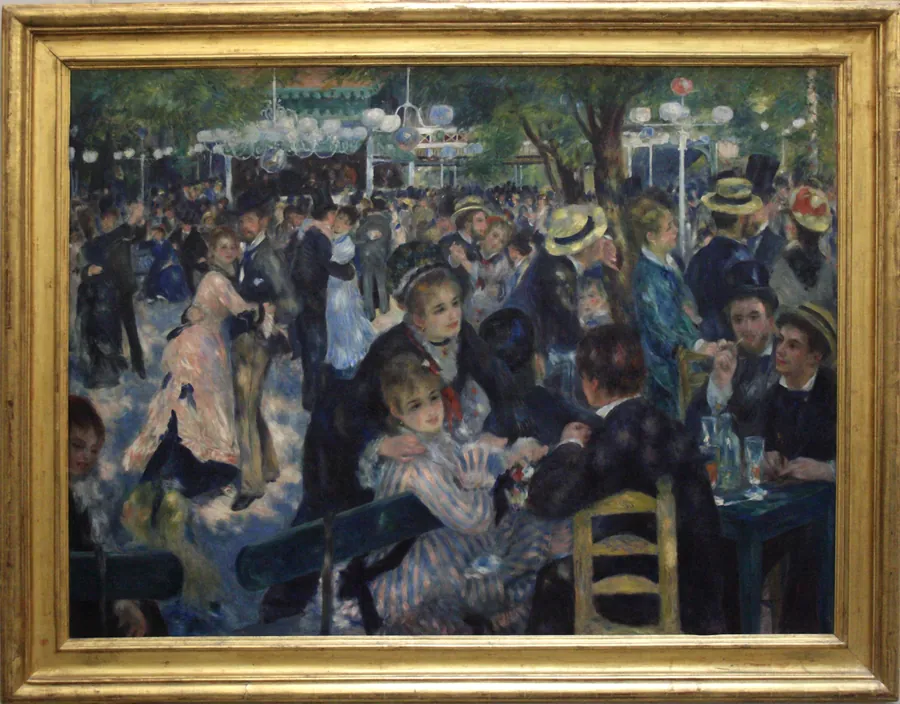
Pierre-Auguste Renoir · 1876
Compare the flashing dance hall with the frozen park scene
Go farther · pointillist blocks
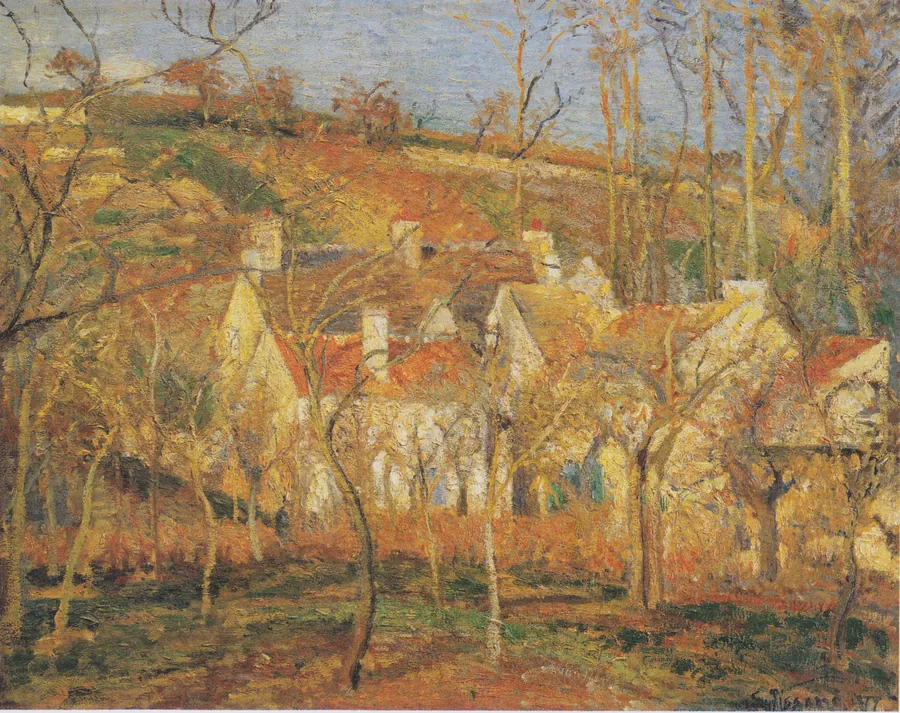
Camille Pissarro · 1877
See how small color patches build a village
Change direction · flattening
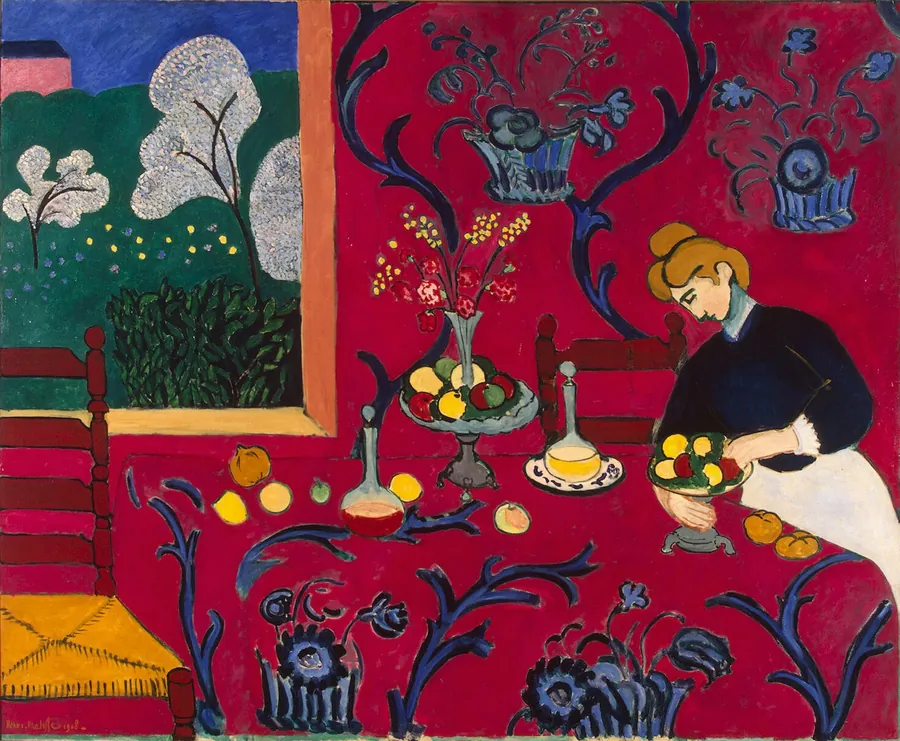
Henri Matisse · 1908
Move to colors that cross object boundaries