What happened
Klimt painted this garden during his summer stay at Attersee. Without figures, towering sunflowers stand like quiet protagonists.
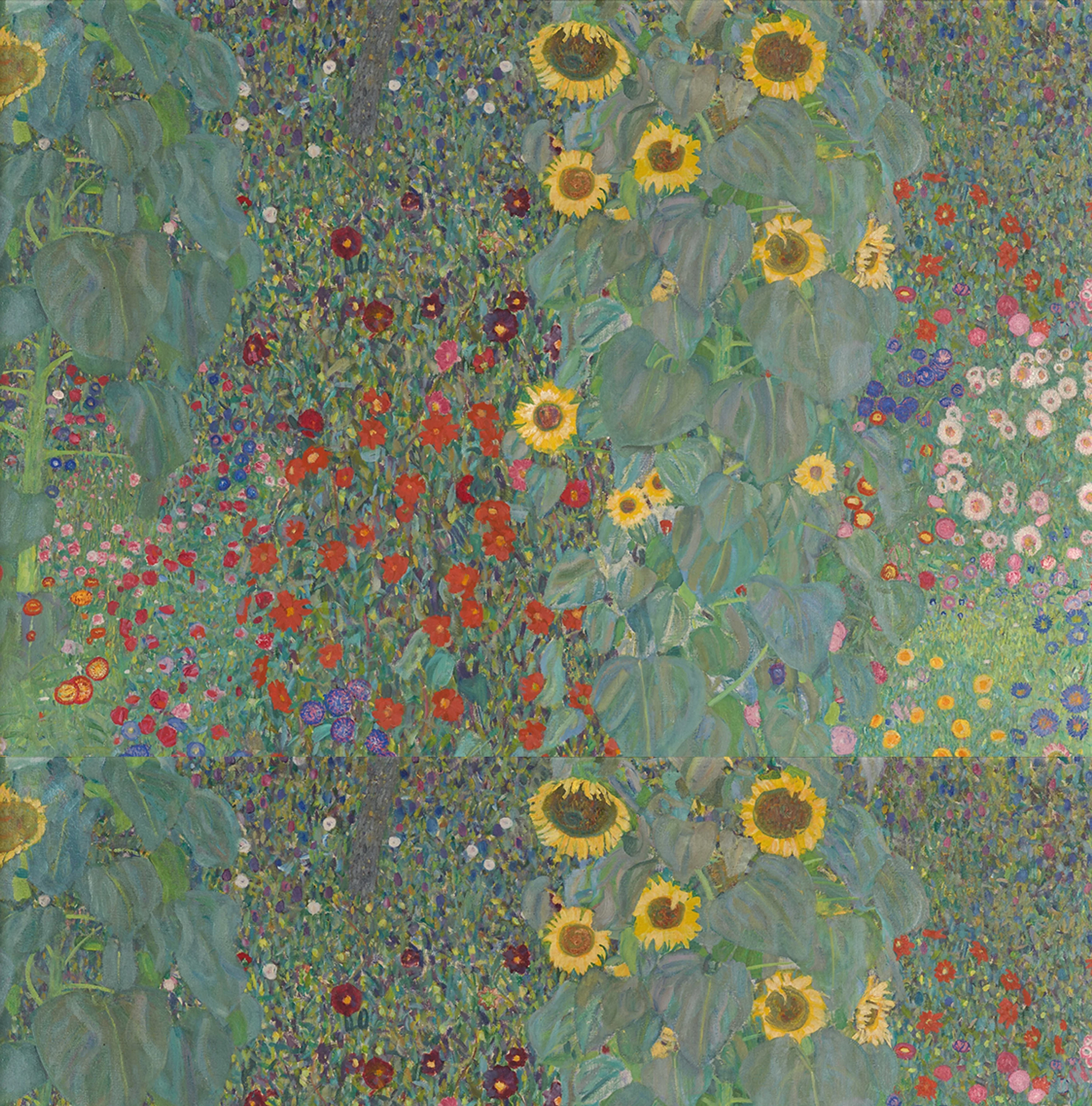
Belvedere (via Wikimedia Commons) · Public Domain Mark 1.0 · Artwork details appear later
A moment for the eye to rest
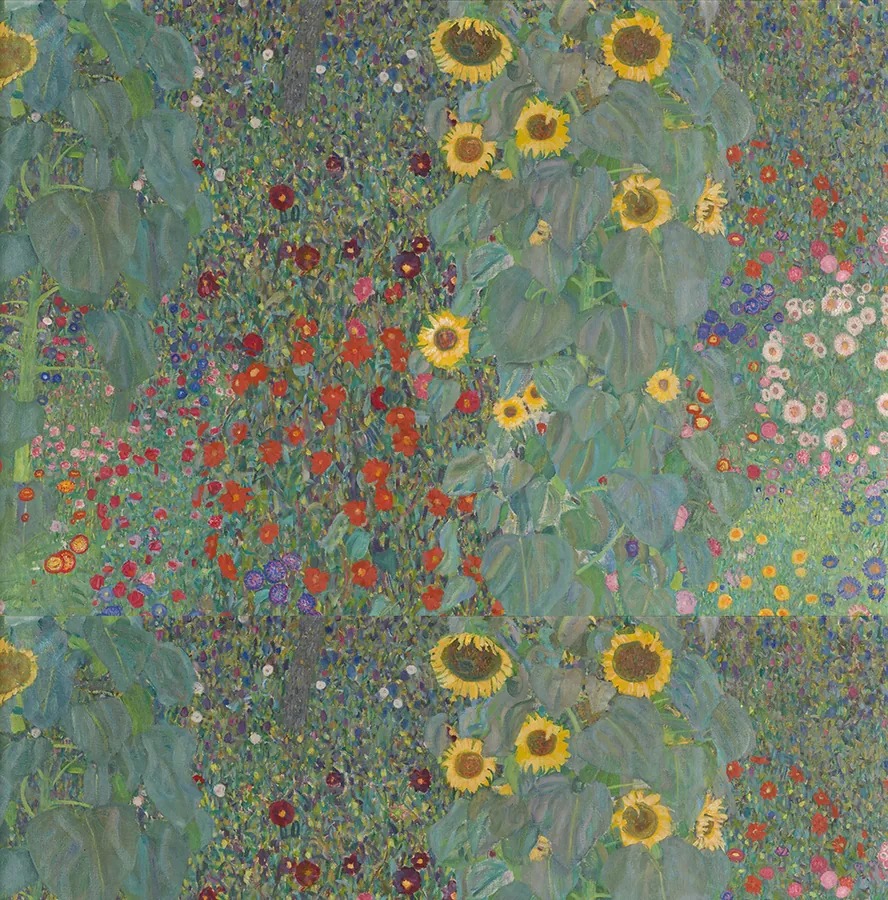
Farm Garden with Sunflowers · The details can wait a little longer
FEEL
UNDERSTAND
Digital image: Belvedere (via Wikimedia Commons) · Public Domain Mark 1.0 · commercial use permitted · View source ↗
Klimt painted this garden during his summer stay at Attersee. Without figures, towering sunflowers stand like quiet protagonists.
The horizon is removed; flowers fill the square canvas. Sunflowers provide vertical structure while smaller blooms scatter attention across the surface.
Light doesn’t create clear shadows but scatters into countless bright dots. You see not a moment’s sunlight, but a continuous, flourishing radiance.
Green underlayers are densely pierced by red, white, blue, and yellow; shapes yield to color rhythms. Nature appears as self-generating fabric.
Almost contemporaneous with The Kiss, Klimt brought his decorative language from golden robes into nature. Landscapes can be complete patterns too.
It stands between depicting a garden and an abstract color field. You recognize flowers but momentarily forget their names, feeling how colors fill the view.
What did it leave with you?
Where next · WHERE TO
Not more of the same—just three possible paths.
Stay nearby · Klimt’s patterns
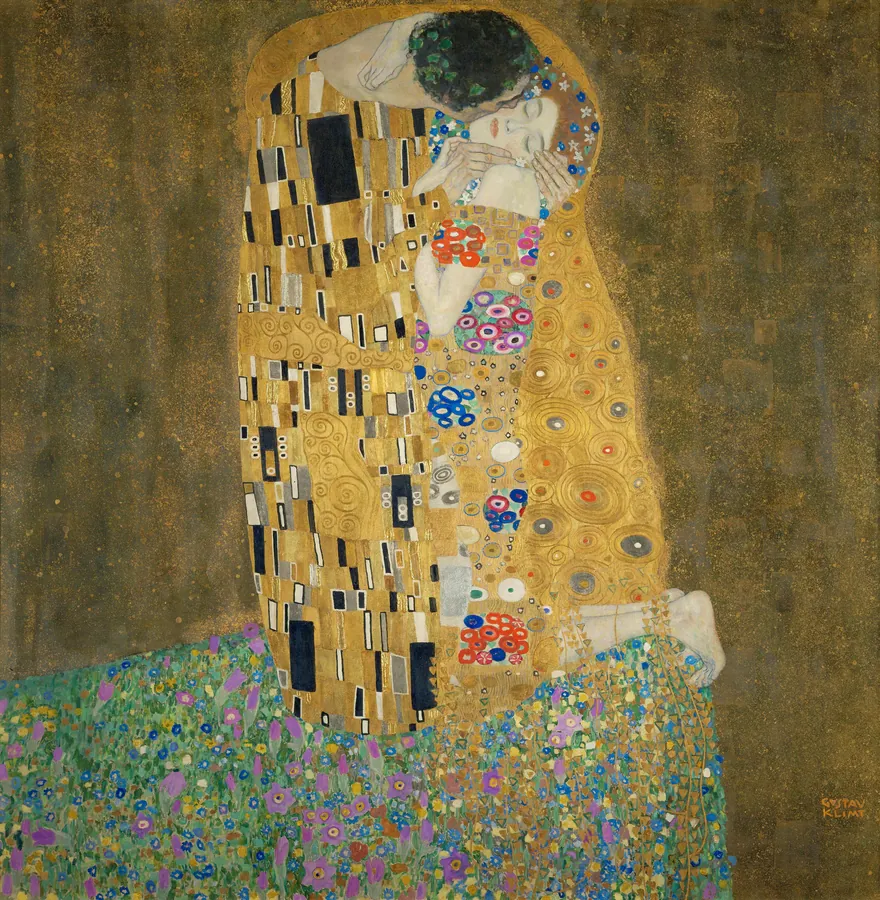
Gustav Klimt · 1907–1908
Tracing decoration from plant fabric back to golden robes
Go farther · flower clusters
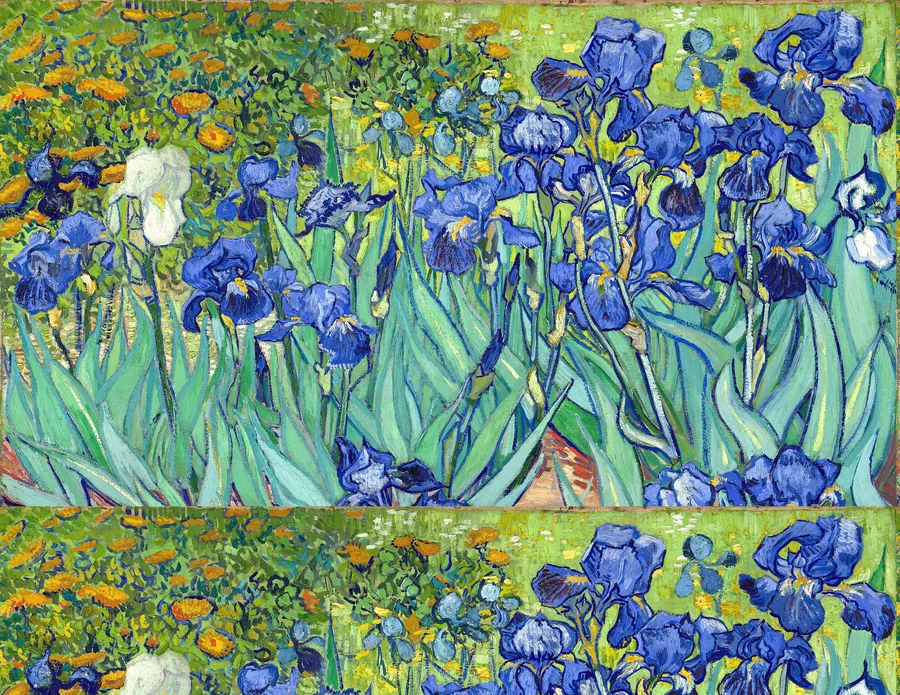
Vincent van Gogh · 1889
Compare Van Gogh's growth with Klimt's decorative surface
Change direction · boundless landscapes
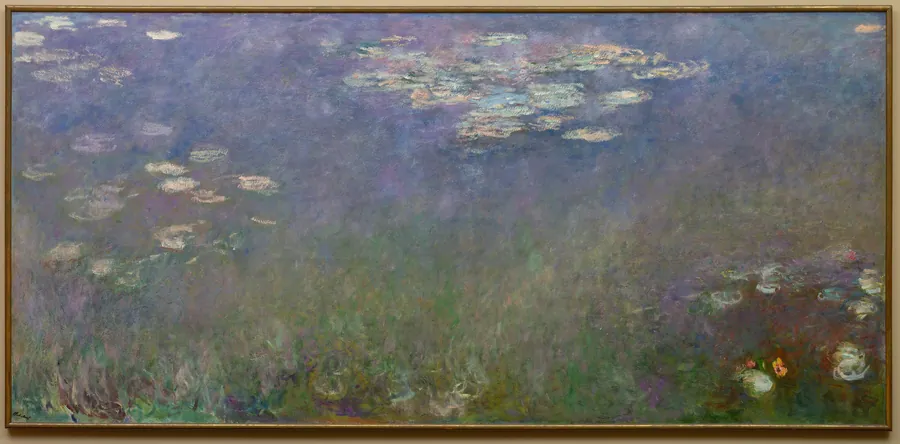
Claude Monet · circa 1915–1926
Further remove the garden from shore and horizon