What happened
The scroll moves slowly along the Fuchun River. Mountains rise and subside, sandbanks appear, and buildings leave faint human traces across a broad environment.

Wikimedia Commons / National Palace Museum · Public Domain · Artwork details appear later
A moment for the eye to rest

Dwelling in the Fuchun Mountains · The details can wait a little longer
FEEL
UNDERSTAND
Digital image: Wikimedia Commons / National Palace Museum · Public Domain · commercial use permitted · View source ↗
Drag or swipe sideways to unfold the scroll.


The scroll moves slowly along the Fuchun River. Mountains rise and subside, sandbanks appear, and buildings leave faint human traces across a broad environment.
There is no single climax. Dense and sparse, open and closed passages repeat; viewing takes on the rhythm of walking and breathing.
Blank paper becomes water and mist, while dry and wet inks make distances emerge as the scroll unfolds.
Monochrome ink directs attention to structure: long hemp-fiber strokes, dots, and pale washes construct the mountain’s duration.
Damaged by fire in the seventeenth century, the work survives in two sections held by different museums. The viewer labels both holdings rather than pretending they remain one object.
It turns landscape from something to possess into somewhere to dwell, while keeping the fractured later life of the object visible.
What did it leave with you?
Where next · WHERE TO
Not more of the same—just three possible paths.
Stay nearby · wandering

Caspar David Friedrich · circa 1818
Move from walking within a scroll to pausing above a sea of fog
Go farther · mountain
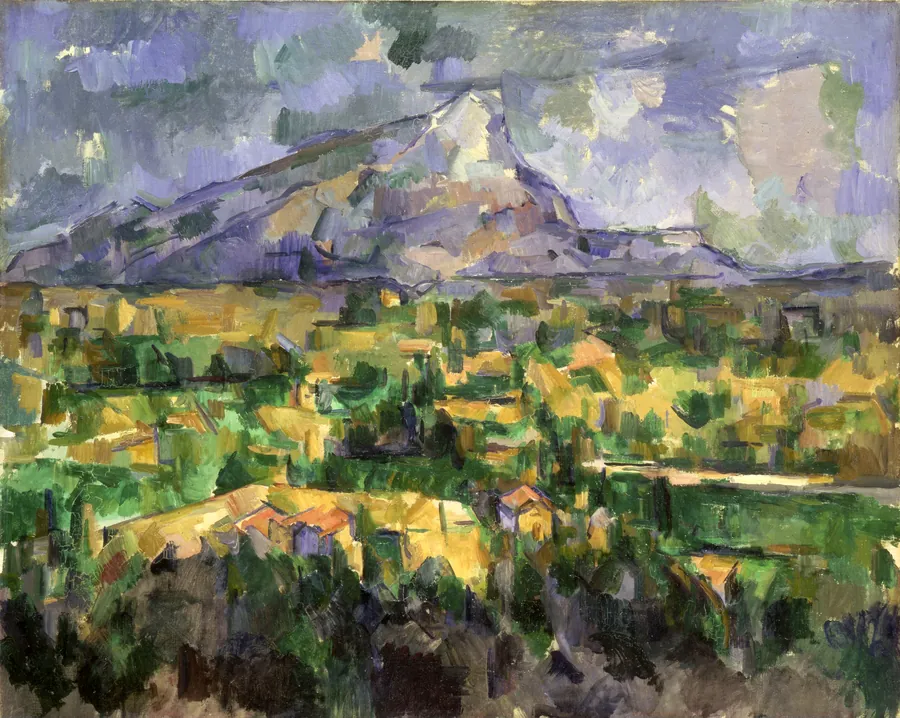
Paul Cézanne · c. 1902–1904
See structure gather through a different tradition of brushwork
Change direction · time
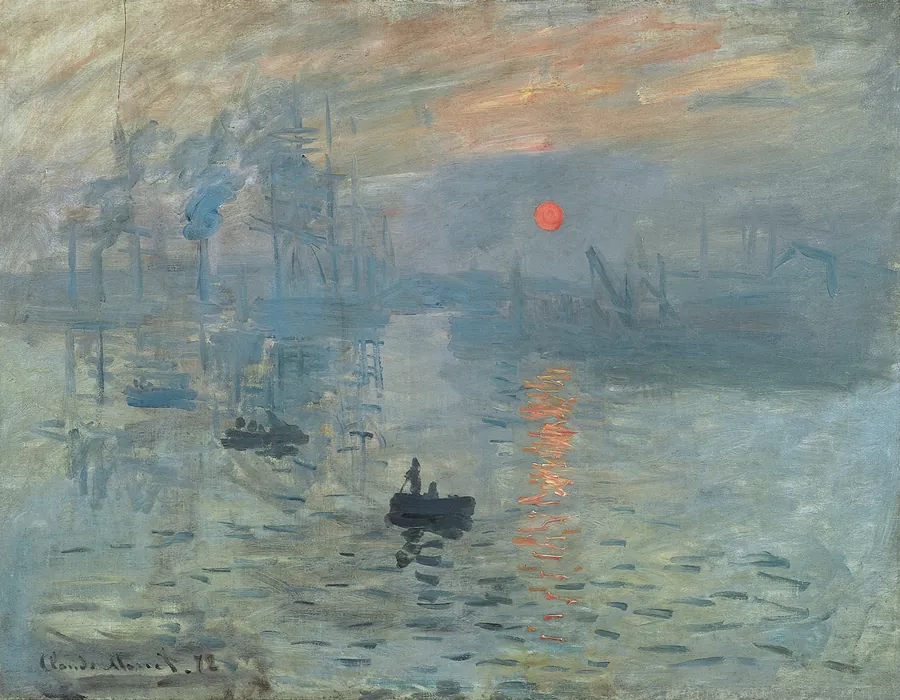
Claude Monet · 1872
Exchange months of accumulated landscape for one harbor instant