What happened
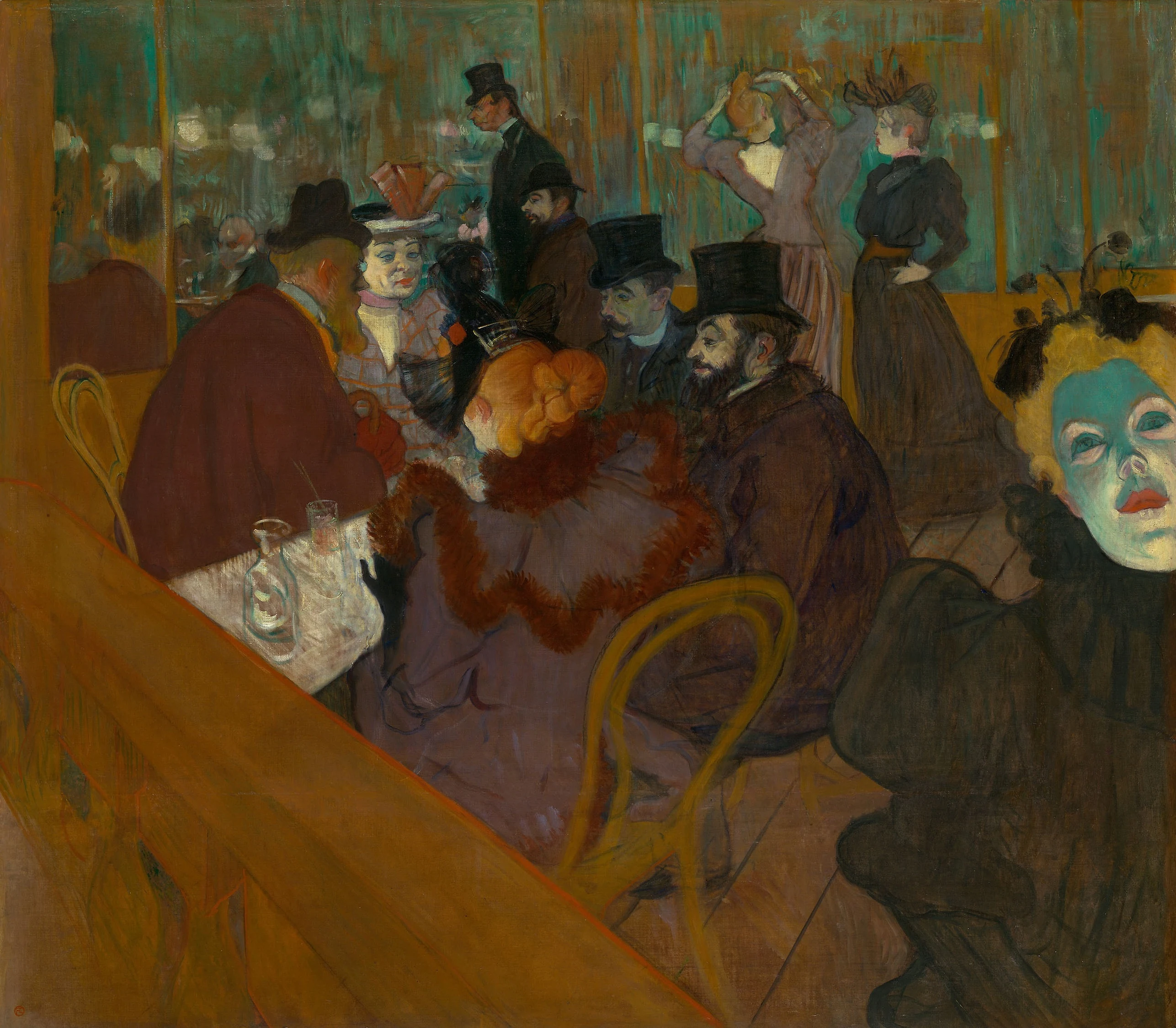
Lautrec frequented Moulin Rouge. Most figures are performers, dancers, and friends he knew. The joy here is not anonymous.
Art Institute of Chicago Open Access · CC0 1.0 · Artwork details appear later
A moment for the eye to rest
At the Moulin Rouge · The details can wait a little longer
FEEL
UNDERSTAND
Digital image: Art Institute of Chicago Open Access · CC0 1.0 · commercial use permitted · View source ↗
Lautrec frequented Moulin Rouge. Most figures are performers, dancers, and friends he knew. The joy here is not anonymous.
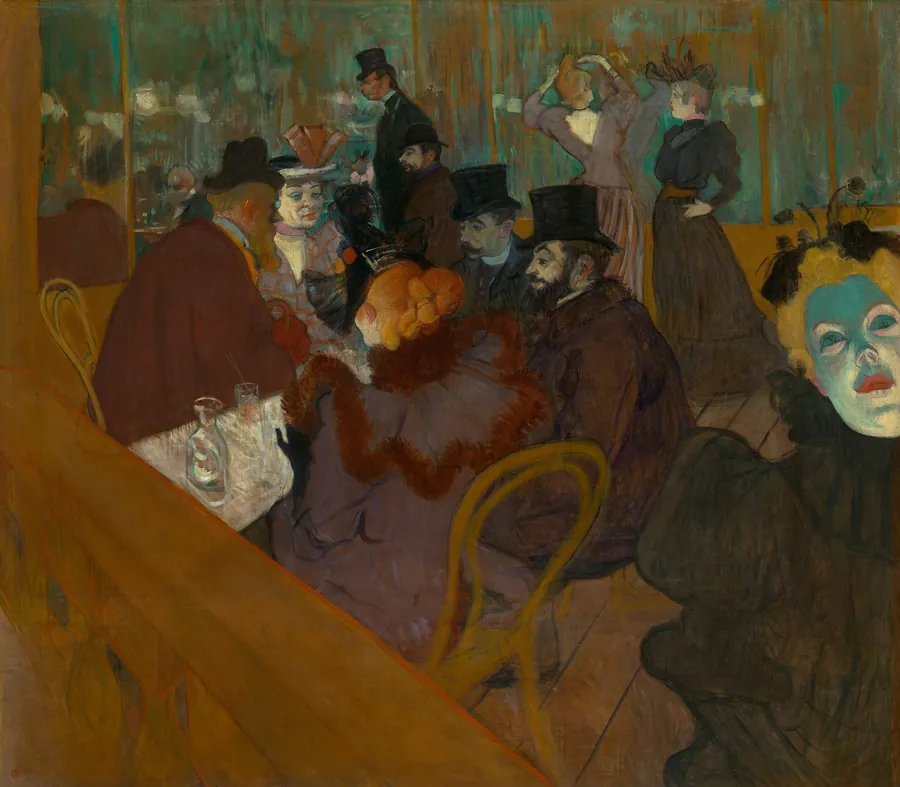
Diagonal railings enter from the lower left, cutting through figures, as if you've just approached a conversation. Mirrors push space further back.
Artificial lights change skin tones, especially the greenish-white face on the right. Light isn't gentle here; it makes night feel like a stage and illusion.
Orange hair, reddish-brown furniture clash with cold greens. Colors reveal the psychological temperature of nightlife rather than natural skin tones.
Late 19th-century Parisian entertainment boomed. Lautrec was both participant and chronicler of those under spotlight.
Nightlife isn't simplified to joy or decadence here. Familiarity and strangeness, performance and exhaustion coexist on one face.
What did it leave with you?
Where next · WHERE TO
Not more of the same—just three possible paths.
Stay nearby · dance hall
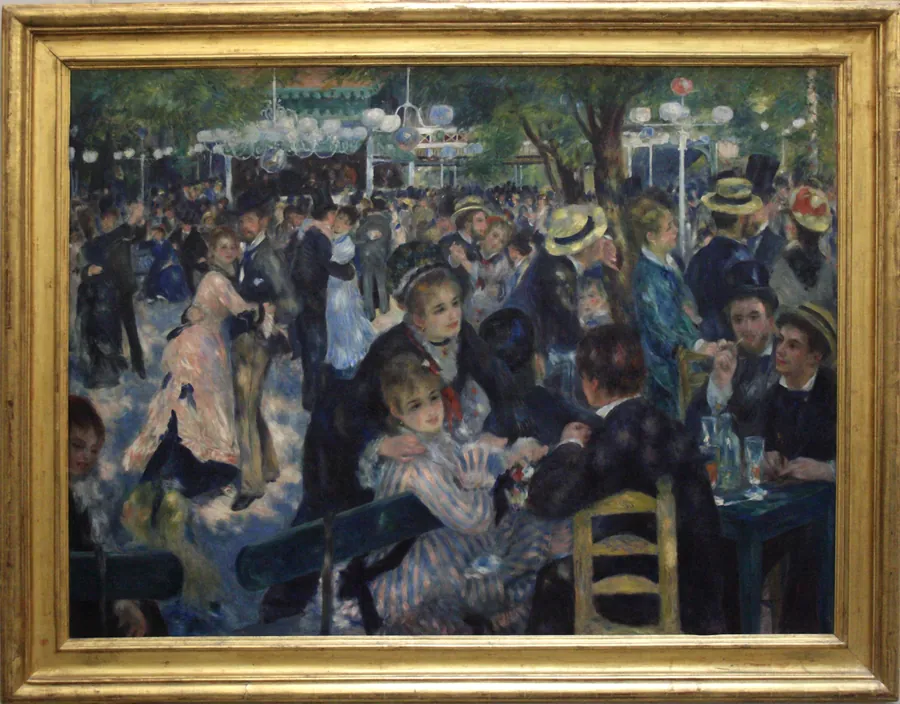
Pierre-Auguste Renoir · 1876
Return to the afternoon when light still danced in leaves
Go farther · night scenes
_1888.jpg)
Vincent van Gogh · 1888
Move from indoor artificial light to blue streets
Change direction · urban nights
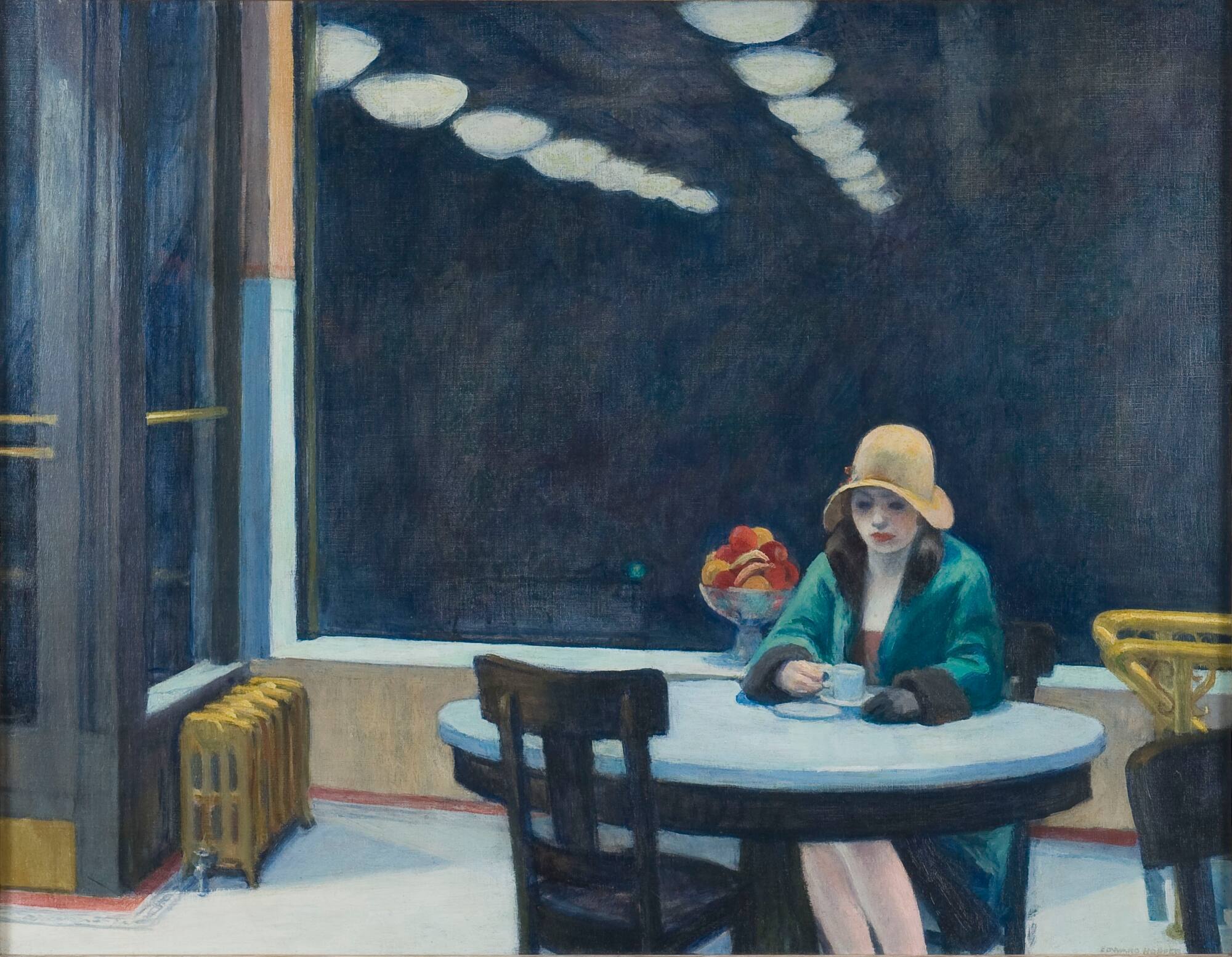
Edward Hopper · 1927
Let the noise suddenly become a lone silence